


Men's Watches Under 200 Euros: What the Mid-Range Price Segment Offers
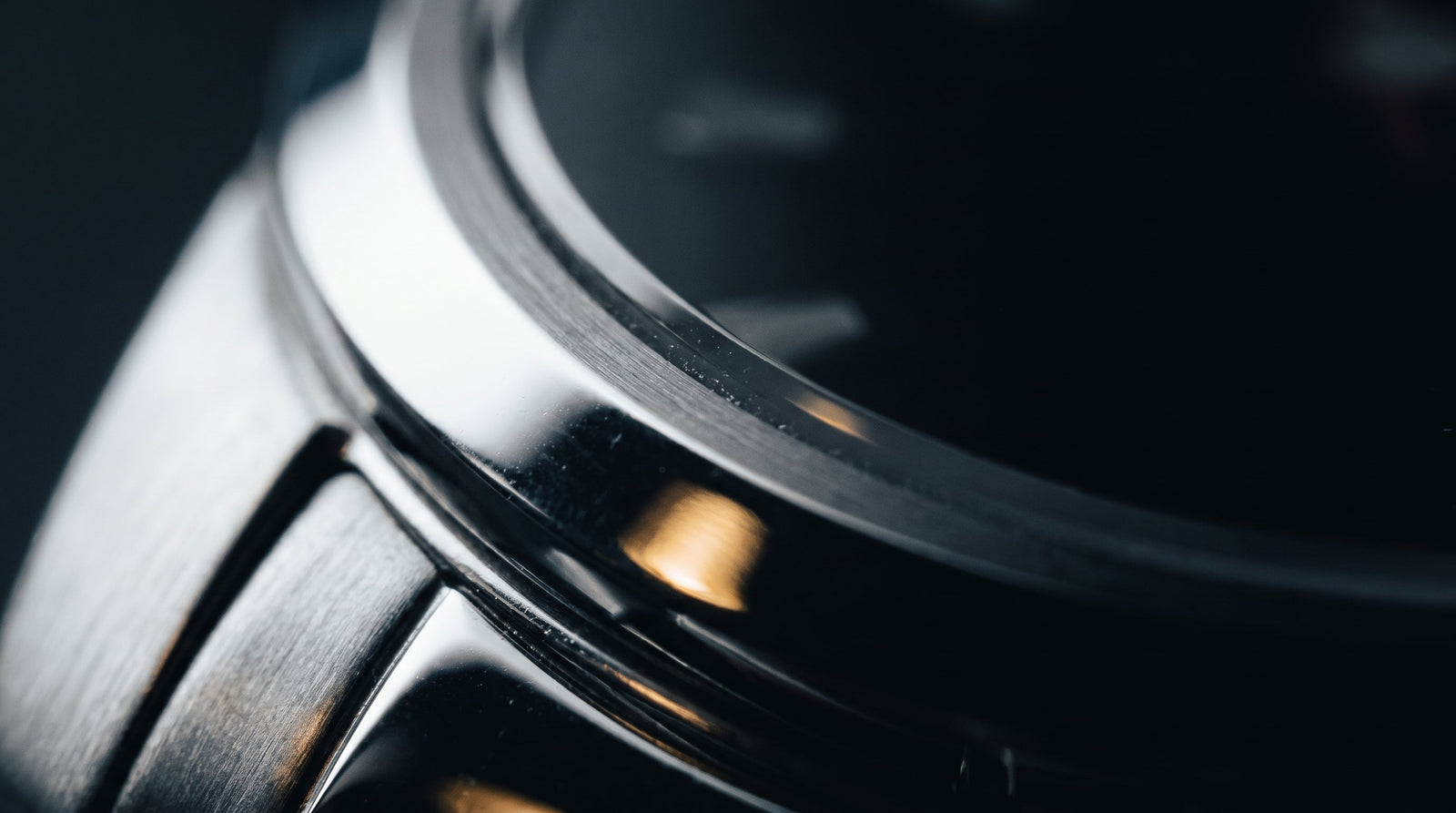

Anyone looking to spend between 100 and 200 euros on a men's watch faces a confusing selection: hundreds of models, different movements, various materials, and technical specifications that are hardly comparable at first glance. This article classifies what is actually technically possible in this price range, which brands are strongly positioned there, and what you should look out for when buying. The basis is the technical database fields of the assortment, not a test result.
The mid-three-digit range is where the price bracket begins in which compromises become less frequent: sapphire crystal instead of mineral glass is possible, proven quartz caliber manufacturers like Miyota are standard, and water resistance ratings of up to 20 ATM are no exception. At the same time, there are significant differences in this band that are not immediately obvious. The following clarifies where these differences lie.
What 100 to 200 euros technically mean for men's watches: movement types and glass quality
In the price range under 100 euros, quartz movements without manufacturer names and mineral glass dominate as the standard. Between 100 and 200 euros, the picture changes noticeably, without having reached the premium class yet.
Quartz movements: caliber makes the difference
By far the largest proportion of models in this price range use quartz movements, mostly from Miyota (a Citizen subsidiary) or of Japanese manufacture. Miyota calibers like the JS25 are durable, low-maintenance, and well-supplied with spare parts for repairs. This is a concrete advantage over no-name quartz calibers from the lowest segment. The accuracy is typically plus/minus 15 seconds per month, which is more than sufficient for everyday use.
Automatic: possible in this price range, but with limitations
Automatic watches, i.e., watches with self-winding via an oscillating rotor, are available from about 130 euros. However, the following applies: automatic is less accurate than quartz. Plus/minus 15-30 seconds per day is common, depending on wearing habits and orientation. Those who need to be accurate to the second are better served with quartz. Those who appreciate the mechanical experience will find the first real entry points in this price range.

Glass types: mineral or sapphire
Mineral glass is hardened and resistant to light scratches, but breaks more easily than sapphire crystal upon a hard impact. Sapphire crystal is the hardest glass available in the watch world (hardness level 9 on the Mohs scale), is practically impossible to scratch in everyday life, but is more brittle and expensive. In the 100-200 euro price range, sapphire crystal is available in several models, which remains the exception in lower price ranges. Mineral glass is still frequently encountered here, however.
| Glass type | Scratch resistance | Breakage behavior | Typical price range |
|---|---|---|---|
| Mineral glass | Medium | Shatters on impact | Frequently under 150 euros |
| Sapphire crystal | Very high | Brittle, rarely cracks | Possible from approx. 130 euros |
Brands that are particularly strongly represented in this band
There are 52 brands listed in the assortment with items between 100 and 200 euros. The breadth is large, but the quality within individual brands varies greatly. Those searching specifically should know which brands are reliably positioned in this segment.
Festina is one of the highest-volume providers in this price range. The Spanish brand offers a wide range of models: diver's watches, chronographs, solar models, and classic three-hand watches. The technical data is stated transparently; glass type and water resistance are mandatory information. Casio is particularly strong in the sporty-functional area, with robust quartz caliber watches and reliable materials. Lorus (a Seiko subsidiary) and Citizen offer solid Japanese movement quality in this band. Zeppelin and Sternglas are German brands with their own character and loyal customers who value clear design.

Case materials and water resistance: what is realistic in this price range
The most common case material in this segment is 316L stainless steel. This alloy is corrosion-resistant, skin-friendly, and durable. From this price range upwards, titanium also occasionally appears, which is lighter than steel for the same volume and represents a sensible alternative for wearers who are sensitive to metal weight or nickel.

Water resistance: numbers and their meaning
Water resistance is specified in ATM (atmospheres) or bar. The number describes the static test pressure and is not a promise for diving depths. What the specifications mean in practice is explained in detail in our guide to water resistance protection classes. As a rough guide:
| Water resistance | Suitable for | Not suitable for |
|---|---|---|
| 3 ATM | Splashing water, rain | Swimming, diving |
| 5-10 ATM | Swimming, showering | Scuba diving |
| 20 ATM | Snorkeling, sporty diving | Deep diving with equipment |
20 ATM is achievable in the 100-200 euro price range with several models, especially in diver's watch lines. Technically, this is more than everyday life requires and shows that this price range enables robust outdoor watches.

Areas of use: office, sports, leisure, and travel
The 100-200 euro price range is broad enough to find well-equipped watches for various areas of use. It is crucial to know the use case before buying.
Office and business
For a neat appearance in everyday professional life, slim three-hand watches with a stainless steel or leather strap, 40-42 mm diameter, and a restrained dial are suitable. Sapphire crystal is a plus here because it permanently prevents scratches from contact with tables. A Swiss quartz movement, as found in Festina Swiss Made models, for example, ensures precision without effort.

Sports and outdoor
For sports activities, water resistance, case robustness, and readability count. Chronographs (stopwatch function via additional pushers and sub-dials) are frequently represented in this price range. Important: A chronograph is a stopwatch function, not a precision certificate. Anyone looking for a chronometer (which is a certified accuracy according to COSC) must invest significantly more.

Leisure and travel
For travel, a solar drive is practical: the watch charges via light, and a battery change is not necessary. Radio-controlled watches (time signal reception via longwave, no Bluetooth) set themselves automatically within reception range. Abroad outside Europe, however, reception may be missing; this is a real disadvantage. A solar quartz watch without radio control is then the more uncomplicated choice.
What to look for when buying: caliber, strap change, service costs
Technical data on the data sheet is the first step. Beyond that, there are practical purchasing criteria that are often overlooked.
Caliber and spare parts
A named caliber, for example, Miyota JS25, is a sign of transparency and facilitates later repairs. Workshops know these calibers, and spare parts are available. For watches without a caliber specification, it is unclear which movement is installed, which makes repairs more difficult or expensive.
Strap change
A replaceable strap significantly extends the useful life of a watch. Standard lug widths (18, 20, 22 mm) allow for the purchase of third-party straps. Proprietary attachments, as found on some sports watches, limit this. More about straps and claspsexplains what to look out for.
Plan for service costs
A quartz watch needs a battery change about every 3-5 years (a few euros). An automatic should be serviced every 5-8 years; the costs for this start at about 80-150 euros in a specialist workshop. Anyone buying an automatic for 130 euros should keep the service costs in mind: they can exceed the purchase price. This is not an argument against automatic, but an argument for knowing it beforehand.


Purchase checklist: this should be clear before the decision
- Movement type clarified: quartz, solar, automatic, or radio-controlled, depending on use.
- Glass type checked: sapphire crystal or mineral glass, depending on intensity of use.
- Water resistance suitable for planned use: at least 10 ATM for regular swimming.
- Caliber designation available: facilitates later maintenance and repair.
- Lug width noted: standard dimensions allow for cheaper strap replacement.
- Case diameter checked for suitability to wrist circumference: 40-44 mm are guidelines for medium wrists.
- Service costs considered: particularly relevant for automatic watches.
Further orientation for a gift decision in this segment is offered by our article on stylish men's watches as a gift idea.
A broader overview of affordable and stylish men's watches is offered by GQ magazine in its overview of affordable men's watches. Technically sound classifications of watches in this price range can also be found at Zeigr in the category watches up to 200 euros. And those who want to know what moves other buyers in this segment can read the buying advice for the best men's watch up to 200 euros at mnma-uhren.


