


Titanium and Stainless Steel Jewelry: A Material Comparison
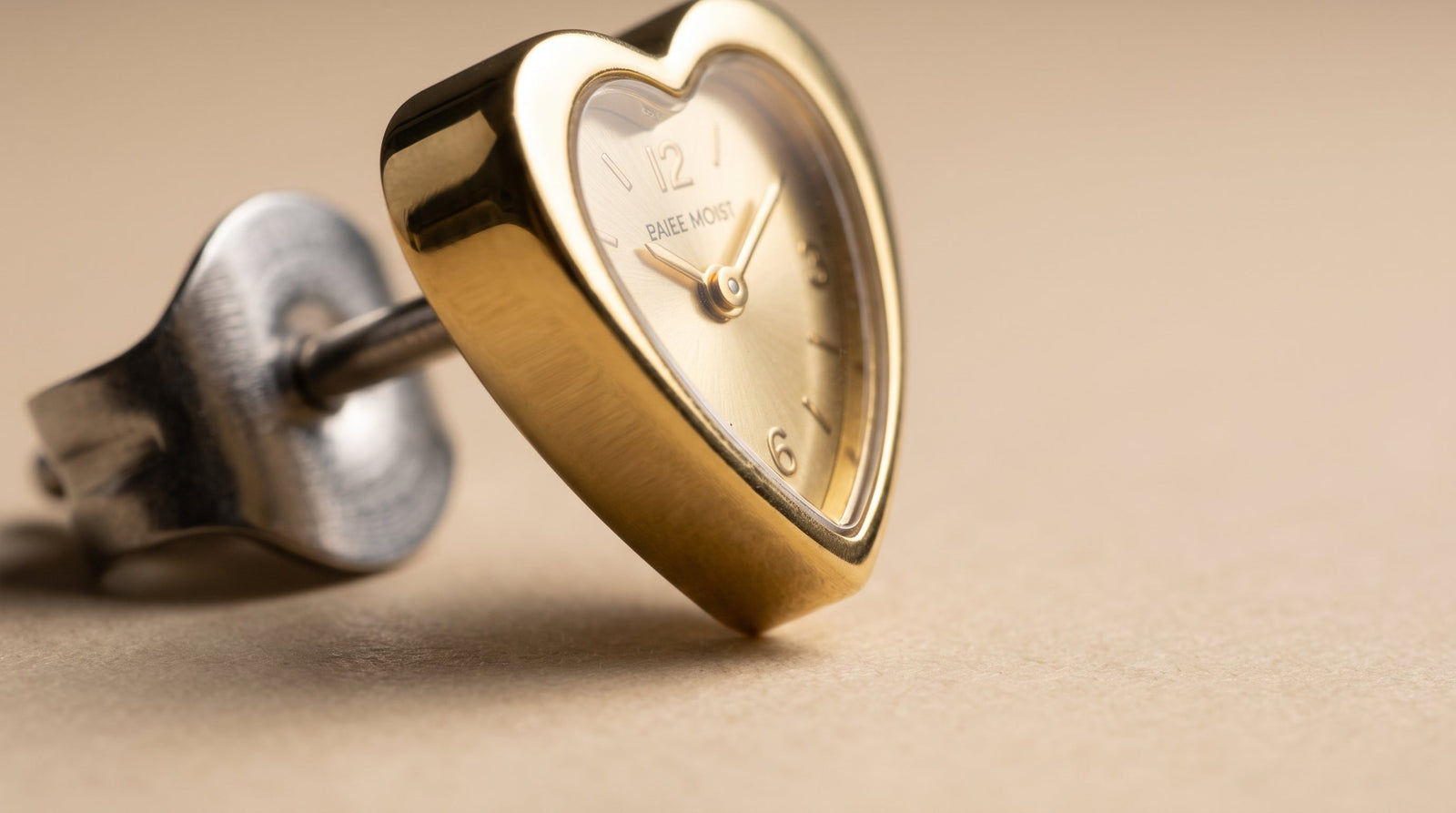

Anyone with sensitive skin or looking for jewelry they can wear permanently will quickly come across two materials: titanium and stainless steel. Both are considered robust, both are corrosion-resistant, and both appear equally in the ranges of jewelry and watch brands. Nevertheless, they differ in several properties that become noticeable when worn and should influence the purchasing decision.
This article compares the technical data of both materials based on manufacturer specifications and material properties. It covers weight, hardness, biocompatibility, coating processes, and care, and ultimately determines which material is better suited for which wearing style and skin type.
Why titanium and stainless steel serve different markets in jewelry
Titanium long led a niche existence in the jewelry sector. It was only when watch manufacturers began to produce cases from titanium that the material became accessible to a wider audience. Brands like Boccia utilized this connection early on and consistently used titanium for bracelets, rings, and stud earrings as well. The result is a range that transfers technical material properties into everyday jewelry.
Stainless steel, on the other hand, has a significantly longer history in jewelry and is now the standard material for bracelets, bangles, and fashionable pendants in the mid-price range. Its processing is more mature, the tools are more widespread, and the costs for raw material and production are significantly lower than those of titanium. This is reflected in the entry-level price: stainless steel jewelry generally starts at a lower price, while titanium carries a surcharge even for small pieces like stud earrings, which is justified by the material properties.
For the buyer, this means: stainless steel is the pragmatic choice for fashionable everyday jewelry, while titanium is the reasoned choice when weight or skin compatibility are the priority.
Titanium: weight, hardness, biocompatibility, and what that means on the wrist
Titanium has a density of about 4.5 g/cm³. Type 316L stainless steel, which is the most common in jewelry, reaches around 8 g/cm³. A titanium bracelet of the same size therefore weighs about half as much as its stainless steel counterpart. This difference is clearly noticeable when wearing large-scale jewelry such as bracelets or wide rings, but is hardly relevant for small pendants or stud earrings.
Titanium also performs well in terms of strength: the tensile strength of pure titanium alloys, depending on the grade, is in a range comparable to tempered steel. This means that despite its lower weight, titanium is not softer or more prone to deformation than stainless steel.
The most important advantage for sensitive wearers lies in its biocompatibility. Titanium contains no nickel and forms a stable oxide layer on the surface that separates the metal from body fluids and skin. This behavior makes titanium one of the few metals used in medical technology for implants. For jewelry, this means: anyone who reacts to nickel or other alloy components is on the safe side with titanium.

A disadvantage of titanium is its more difficult processability. Titanium is harder to polish than stainless steel and does not take on high-gloss surfaces as easily. Most titanium jewelry pieces therefore show a brushed or matte surface. Those looking for mirror-like shine will find it more often with stainless steel.
In addition, titanium is more susceptible to visible scratches on the surface because fine grooves show up more strongly on a matte surface than on a high-gloss polished one. This is not a quality defect, but a property of the material that should be taken into account when purchasing.
Stainless Steel 316L: corrosion resistance, polishability, and allergy risk
In jewelry, almost exclusively the 316L stainless steel type is used. The "L" stands for a reduced carbon content, which improves corrosion resistance and facilitates weldability. The chromium and molybdenum content in the alloy ensures that the material retains its surface even with constant contact with sweat, water, or cleaning agents.
Polishability is one of the clear advantages of stainless steel. The material takes on high-gloss surfaces very well and can be precisely ground and mirrored during production. Stainless steel bracelets, bangles, and pendants can therefore vary visually between matte satin finishes and high gloss, often combined in one piece.
The allergy risk with stainless steel is lower than with simple brass or chrome-plated alloys, but not zero. 316L contains nickel in small amounts. For most wearers, the concentration is low enough not to trigger a reaction. However, in cases of severe nickel allergy, even 316L can cause irritation, especially if the surface has been attacked by scratches or acid and the protective layer is no longer intact. Anyone with a diagnosed nickel allergy should switch to titanium in case of doubt.
| Property | Titanium | Stainless Steel 316L |
|---|---|---|
| Density (g/cm³) | approx. 4.5 | approx. 8.0 |
| Nickel content | none | low (approx. 10-14%) |
| Biocompatibility | very high (medically proven) | good, if surface is intact |
| Polishability | limited, rather matte | very good, high gloss possible |
| Scratch susceptibility (visible) | higher (matte surface) | variable depending on surface |
| Raw material costs | significantly higher | lower |
Surface finishes: PVD, IP coating, and rhodium plating in comparison
In practice, both materials are rarely sold in their bare form. Surface finishes change the look, improve protection, or enable colors that the base material does not offer.
PVD and IP coating
PVD stands for Physical Vapour Deposition, a process in which thin metal layers are applied to the base material under vacuum. IP (Ion Plating) is a variant of this, where the adhesion of the layer is improved by ion bombardment. Both processes create layers that are significantly more durable than electroplated gold or colored lacquer. This explains why PVD and IP-coated bracelets made of stainless steel or titanium are available in gold, rose gold, black, or gunmetal, and these colors last longer even with daily wear than simple gold plating.
The Tommy Hilfiger bracelet in black braided design shows how IP coating on stainless steel creates a unique look that would not be achievable without coating.

Rhodium plating
Rhodium plating is a galvanic process in which a thin layer of rhodium is applied. Rhodium belongs to the platinum group and is very hard and chemically stable. In jewelry, rhodium plating is primarily used on silver to protect the surface from tarnishing and to enhance the white gold effect. Rhodium plating is rarer on stainless steel or titanium, but possible if a particularly bright, hard-matte shine is desired.
The essential difference to PVD: rhodium plating is galvanic and therefore thinner. The layer is typically in the range of a few hundredths of a millimeter. With heavy mechanical abrasion, for example on the inner band of a bracelet, it can be worn through faster than a PVD layer. Rhodium-plated jewelry must therefore be retreated after a few years if the surface is to look radiant again.
| Process | Typical base material | Durability | Renewable? |
|---|---|---|---|
| PVD / IP | Stainless steel, titanium | high | only by re-application at the manufacturer |
| Rhodium plating | Silver, occasionally stainless steel | medium | yes, by a galvanizer |
| Gold plating (galvanic) | Stainless steel, titanium, silver | low to medium | yes |
A more detailed classification of coating processes in the context of various jewelry materials can be found in the article Silver, gold plating, and titanium in jewelry: classifying materials.
Care and longevity: what both materials can withstand
Titanium is easier to care for in everyday life than stainless steel, although not indestructible. The material does not react to water, sweat, or most household chemicals. Lukewarm water with a mild soap additive and a soft brush are sufficient to remove dirt from a titanium surface. Scouring agents and aggressive cleaners attack the oxide layer and should be avoided, even if titanium usually rebuilds it quickly.
Scratches on titanium surfaces can be treated on matte pieces with a fine abrasive pad in the direction of the brush. High-gloss polished titanium pieces are rarer, but like stainless steel, they need a polishing paste and a delicate touch.
Stainless steel 316L is also very easy to care for. The polished surface shows fingerprints quickly, but they can be removed just as quickly with a soft, lint-free cloth. For deeper cleaning, the same applies as for titanium: soapy water and a soft brush, no scouring agents. High-gloss surfaces can be refreshed with a suitable metal polishing paste if fine scratches become visible.
Coated pieces, whether PVD, IP, or rhodium-plated, require a little more care: no ultrasonic cleaners without checking with the manufacturer, no contact surfaces with hard objects if it can be avoided. The coating itself is the most sensitive element, not the base material.
Anyone who wants to know more about cleaning and caring for 925 sterling silver jewelry will find other requirements described there: Jewelry made of 925 silver: material knowledge and care tips.
Who benefits from which material
The choice between titanium and stainless steel depends on three factors: wearing comfort, skin compatibility, and visual requirements.
Titanium is recommended if weight is a factor. This applies primarily to large, wide bracelets or jewelry that is worn all day. Anyone who is allergic to nickel or has already had experience with skin irritation from metal jewelry is on the safer side with titanium because the material contains no nickel and the oxide layer remains stable. Children with sensitive skin benefit from titanium stud earrings over simple stainless steel models for the same reason.
Stainless steel 316L is the better choice if a specific surface look is the priority. High-gloss polished jewelry, pieces with elaborate milling, or combinations of satin and mirrored surfaces are more frequently available in stainless steel and are more mature in terms of processing technology. For wearers without a nickel allergy and with a preference for fashionable designs, stainless steel is the pragmatic, readily available choice in the mid-price range.
| Situation | Recommendation |
|---|---|
| Nickel allergy or sensitive skin | Titanium |
| Jewelry for children | Titanium (e.g., Boccia) |
| Wearing a large, heavy bracelet all day | Titanium (weight advantage) |
| High-gloss look or colored coating | Stainless steel 316L with PVD/IP |
| Fashionable everyday jewelry, mid-price range | Stainless steel 316L |
| Coated jewelry in gold or rose gold look | Stainless steel 316L with IP gold plating |
The connection between both material worlds and watch manufacturing is described in a specialist article on Titanium watches and their advantages and disadvantages clearly from a materials engineering perspective.


