


Automatic Calibers at a Glance: Miyota, Seiko NH, and Sellita
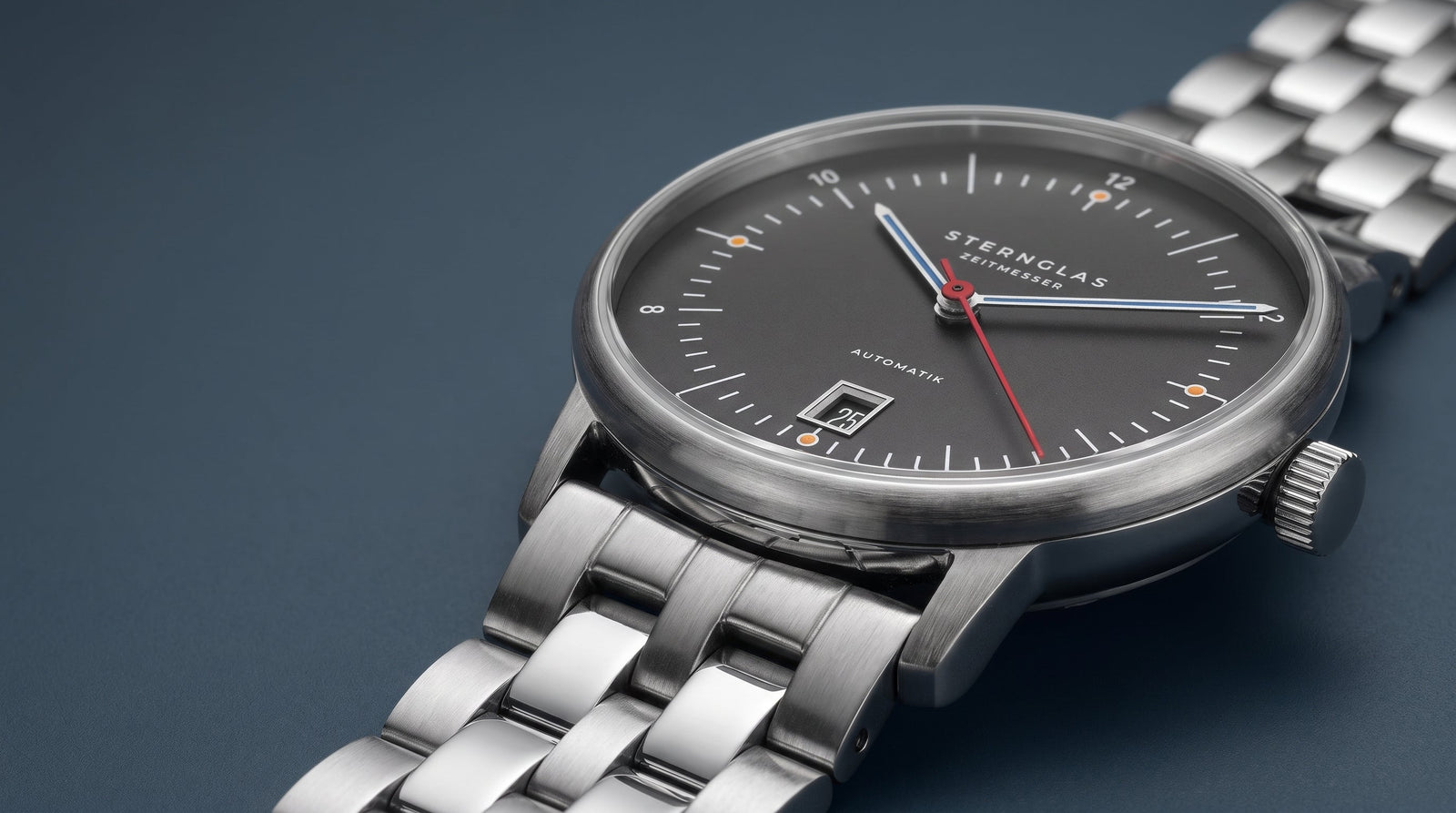

Anyone buying an automatic watch will quickly come across caliber designations like Miyota 8215, Seiko NH35, or Sellita SW200. What is behind these numbers, and does it make a difference which movement is installed in a watch? This article compares the technical data of the most common mid-range automatic calibers, without independent measurements: the basis is the published manufacturer data and the caliber specifications from the product catalog.
A caliber is not the same as a movement. The movement is the finished, ready-to-install unit; the caliber is the manufacturer's type designation, comparable to a model number. Those who know the calibers can directly compare watches from different price ranges and brands, even if the cases look completely different.
What a caliber tells you: Understanding designation, origin, and performance data
The caliber designation reveals which manufacturer the base movement comes from and which technical generation it represents. Miyota (a subsidiary of Citizen) assigns four-digit numbers like 8215 or 9015. Seiko uses alphanumeric codes like NH35 or 4R36. Sellita, a Swiss base movement manufacturer, historically aligns with ETA designations: the SW200 corresponds in its basic architecture to the ETA 2824-2.
Relevant performance data for a caliber includes: accuracy in seconds per day, power reserve in hours, oscillation frequency (beat rate) in vibrations per hour (vph), the presence of a shock protection system, and whether a hacking function (seconds stop) is available. The latter allows the watch to be set to the exact second: when the crown is pulled out, the second hand stops.
Less relevant for everyday use, but a criterion for watch enthusiasts: whether the caliber can be modified or refined with decorative work. Swiss base movements like Sellita or ETA are better documented in this regard and can be serviced by more independent watchmakers than some Asian calibers.
Miyota movements: 8215, 9015, and JS25 in technical profile
Miyota produces in Japan and is one of the world's largest manufacturers of automatic base movements by volume. The 8-series calibers, especially the 8215, are considered particularly robust and low-maintenance. The 8315 is a further development with a hacking function.
Miyota 8215 and 8315
The 8215 oscillates at 21,600 vph (6 vibrations per second), which corresponds to a visibly stuttering second hand. According to the manufacturer, the accuracy is -10 to +30 seconds per day. This is typical for a mass-produced automatic, but at the lower end of the tolerance range. The 8315 adds the hacking function to the 8215, which makes setting the watch easier. Both calibers have a power reserve of 42 hours.
Miyota 9015
The 9015 is the flatter and more precise flagship of the Miyota automatic line. It oscillates at 28,800 vph, which corresponds to a smoother movement of the second hand. The stated accuracy improves to -10 to +15 seconds per day. The power reserve is 42 hours. The 9015 is suitable for flatter cases and is used by brands like Sternglas when a slim profile is a priority.
Miyota JS25
The JS25 is a skeleton caliber with a visible rotor. It is based on the 8-series platform and is installed in watches with an open dial. The basic technical data is comparable to the 8215; the difference lies in the visual design: the rotor and the main plate are finished for display purposes.


Seiko calibers: NH35, NH36, and 4R36 in data and practice
Seiko provides its automatic base movements through its subsidiary TMI (Time Module Inc.). The NH series is the current standard line for export and is gradually replacing the older 4R series.
Seiko NH35 and NH36
The NH35 is a three-hand caliber with a hacking function and bi-directional winding. It oscillates at 21,600 vph and, according to the manufacturer, achieves an accuracy of -20 to +40 seconds per day. This is more generously tolerated than the Miyota 8215. The power reserve is 41 hours. The NH36 adds a day display to the date; otherwise, both calibers are technically identical. The NH series replaced the older 4R35/4R36 calibers, which are structurally very similar but reflect older production standards.
Seiko 4R36
The 4R36 is the predecessor to the NH36 and offers date, day, and hacking at 21,600 vph. Accuracy and power reserve largely correspond to the NH36. It is still found today in many models produced before the NH transition. Anyone who finds a watch with a 4R36 gets a technically equivalent, slightly older caliber.

Sellita SW200 and SW300: Swiss base movements in the mid-range
Sellita, based in La Chaux-de-Fonds, is the most important independent Swiss base movement manufacturer. The company emerged as a supplier and alternative after ETA (Swatch Group) began restricting its base movement supplies to independent brands.
Sellita SW200
The SW200 is a three-hand caliber with date that is very similar in construction and dimensions to the ETA 2824-2. It oscillates at 28,800 vph and achieves an accuracy of -7 to +12 seconds per day in the standard version. The power reserve is 38 hours. A hacking function is present. The SW200 is common among mid-range Swiss brands because it is manufactured within Swiss quality frameworks and interchangeability with ETA parts is largely guaranteed.
Sellita SW300
The SW300 is a flatter caliber with 28,800 vph, designed for slimmer cases. The accuracy corresponds to the SW200. The power reserve is 38 hours. The SW300 is found in watches where the height of the caliber is a design criterion, for example in thin dress watches.
ETA movements: Reference point and basis for comparison
ETA SA, part of the Swatch Group, is historically the benchmark for Swiss mid-range base movements. The ETA 2824-2 (three-hand with date, 28,800 vph, power reserve 38 to 80 hours depending on the version) and the ETA 2836-2 (with day display) are the most cited reference calibers. Since ETA gradually restricted its base movement supplies to Swatch Group brands, Sellita has become the direct replacement for many independent manufacturers.
ETA itself specifies the 2824-2 with different tolerances depending on the grade (Elaborée, Top, Chronomètre): from -7/+13 seconds per day in Elaborée to -4/+6 in Chronomètre tuning. This shows that the same caliber base can achieve significantly different performance values through selection and fine adjustment.
Accuracy, power reserve, and beat rate in direct comparison
The following table summarizes the most important technical characteristics. The data comes from the published manufacturer specifications.
| Caliber | Manufacturer | Beat rate (vph) | Power reserve (hrs.) | Accuracy (sec./day) | Hacking |
|---|---|---|---|---|---|
| Miyota 8215 | Miyota (JP) | 21,600 | 42 | -10 / +30 | No |
| Miyota 8315 | Miyota (JP) | 21,600 | 42 | -10 / +30 | Yes |
| Miyota 9015 | Miyota (JP) | 28,800 | 42 | -10 / +15 | Yes |
| Seiko NH35 | TMI / Seiko (JP) | 21,600 | 41 | -20 / +40 | Yes |
| Seiko NH36 | TMI / Seiko (JP) | 21,600 | 41 | -20 / +40 | Yes |
| Seiko 4R36 | TMI / Seiko (JP) | 21,600 | 41 | -20 / +40 | Yes |
| Sellita SW200 | Sellita (CH) | 28,800 | 38 | -7 / +12 | Yes |
| Sellita SW300 | Sellita (CH) | 28,800 | 38 | -7 / +12 | Yes |
| ETA 2824-2 (Elab.) | ETA (CH) | 28,800 | 38-80 | -7 / +13 | Yes |
An important note on how to read this: The stated accuracy is a factory tolerance specification, not an individual measurement. A specific unit may lie within or slightly outside this range, depending on the position, temperature, and wearing habits. If you want to be accurate to the second, you are better served with a quartz watch. The fundamental differences between quartz, automatic, and other drive types are explained in more detail elsewhere.
Which caliber fits which budget and requirement
The decision depends on several criteria: price of the watch, origin requirements, style preferences, and whether a hacking function is desired.
| Requirement / Situation | Recommended caliber | Reasoning |
|---|---|---|
| First automatic, robust everyday use | Miyota 8315 or Seiko NH35 | Robust, affordable, easy to maintain |
| Flat case, dress watch | Miyota 9015 or Sellita SW300 | Low height, higher frequency |
| Swiss origin important | Sellita SW200 or SW300 | Swiss Made-capable, ETA-compatible |
| Precision as a priority | Sellita SW200 or Miyota 9015 | Tighter tolerances than NH35/8215 |
| Display movement / skeleton design | Miyota JS25 or 9015 | Finishing suitable for display |
Anyone looking for an automatic watch in the price range up to 500 euros will generally be confronted with one of the calibers mentioned above. The caliber alone does not determine the quality of the finished watch: glass type (sapphire or mineral), case finishing, water resistance, and the strap are just as important. More on what self-winding means in everyday life is explained in the article Automatic watches for beginners.


Miyota publishes technical overviews of its current caliber line, which can serve as a reference for basic data such as frequency and power reserve: Miyota Caliber Overview (PDF).


