


Bering vs. Danish Design: Nordic Watch Design in Data Comparison
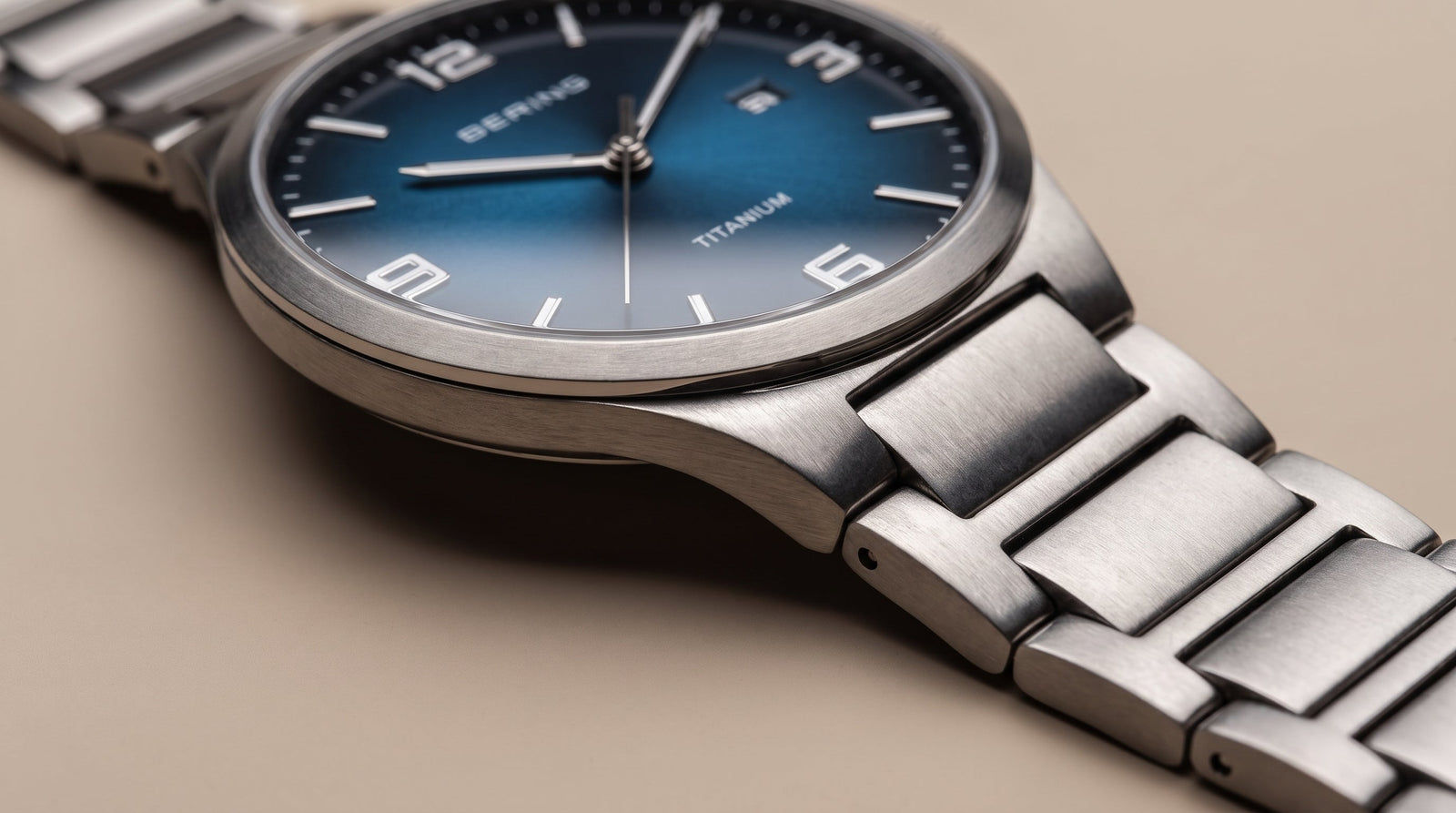

Anyone looking for a Scandinavian watch will quickly come across two names: Bering and Danish Design. Both come from Denmark, both focus on flat cases and minimalist dials, and both can be found in the mid-three-figure price range. Anyone choosing between the two brands rightly wonders whether the difference is only on paper or if it is also reflected in the technical specifications. This article compares the data sheets of both brands from the uhren4you catalog; no wear test, no editorial recommendation, just a direct comparison of figures and materials.
The answer depends on what you expect from an everyday watch: particularly low weight, scratch-resistant glass, a specific movement, or a concrete price range. Each of these points is broken down below so that the decision is based on a solid foundation.
Two brands, one aesthetic: what separates Bering and Danish Design
Bering was founded in Denmark in 2012 and carries the design line of the Arctic North through its entire range: flat cases, narrow bezels, and dials without superfluous scales. Danish Design has been around longer and dates back to the Holst house, which has been connecting Danish designers like Tiroir and others with watch manufacturing since the 1980s. The brand carries the term "Danish design" directly in its name, which formulates a certain claim.
Both brands share the basic idea of Scandinavian product design: function determines form, ornament is omitted. As a result, many models from both houses look similar at first glance. At second glance, the choice of materials, glass standard, and movement concept differ enough to influence the purchasing decision.
In the uhren4you catalog, Bering is represented with around 825 items, Danish Design with a good 262. This does not mean that Danish Design is less well-positioned; it means that Bering shows a broader collection within the shop and carries more lines in parallel: Titanium, Ultra Slim, Classic, Ceramic, Solar, Automatic.
Case and glass: sapphire, titanium, and stainless steel in comparison
Glass standard
Bering uses sapphire crystal for large parts of its range, i.e., synthetic corundum with a hardness of 9 on the Mohs scale. This is the same standard used by more expensive Swiss watches, and it reliably protects the dial in everyday life from scratches caused by keys or table edges. Depending on the model and price range, Danish Design uses sapphire crystal or mineral glass; those who want to be sure should check the respective data sheet. A detailed explanation of the differences between the glass types is provided in the article Sapphire crystal, mineral glass, Hardlex: thinking about watch glass and water resistance together.
Case material
Titanium is a distinct line feature at Bering: the Titanium collection uses cases and bracelets made of brushed titanium, which is about half the weight of stainless steel and is skin-friendly because it releases almost no nickel ions. Danish Design also uses titanium, but not consistently in its own line; titanium models exist, but are not as prominently positioned as a pillar of the range. Stainless steel remains the most common case material for both brands in entry-level and mid-range models.


| Feature | Bering (Titanium line) | Danish Design (Titanium models) |
|---|---|---|
| Case material | Titanium (own line) | Titanium (individual models) |
| Glass standard | Sapphire crystal (range feature) | Sapphire or mineral glass (per model) |
| Bracelet | Titanium link bracelet or leather/textile | Stainless steel, leather, textile |
| Nickel-free | Yes (titanium is hypoallergenic) | Yes for titanium models |
Watch movements: which calibers both brands use
A movement is the entire drive unit of a watch; a caliber is the exact type designation of a specific movement. Both terms are often mixed up in everyday life, but they do not mean the same thing.
Bering relies predominantly on quartz movements of Japanese origin, primarily from Miyota. In the Automatic line, an automatic movement is used, i.e., a mechanical movement that winds itself through the movement of the wrist. The Solar line uses solar movements that recharge the battery using light (natural as well as artificial); a fully charged battery lasts for several months, depending on the model.


Danish Design predominantly uses quartz movements in its standard range, often from Ronda or Miyota. A broad automatic collection does not exist in the Danish Design shop range in comparable depth to Bering. So, if you are looking for a mechanical automatic movement under a Scandinavian dial, you will find a larger selection at Bering.
| Drive type | Bering | Danish Design |
|---|---|---|
| Quartz | Yes, broad base | Yes, main drive |
| Solar | Yes, own line | Individual models |
| Automatic | Yes, own line | Hardly represented |
| Radio-controlled | No | No |
Water resistance and everyday suitability in data comparison
Water resistance in bar is not an indication of the maximum diving depth, but a pressure test value under laboratory conditions. 3 bar means: the watch survives splashes, but not swimming. 5 bar is sufficient for occasional contact with water, i.e., rain or brief submersion. From 10 bar, swimming in shallow water is no problem; diving requires at least 20 bar and a helium-ventilated case, which is not the case for either brand.
Bering models are tested at 3 to 5 bar depending on the line; the Titanium and Classic models are typically tested at 5 bar and are therefore suitable for everyday use in rain and for washing hands. Danish Design is in the same range; 5 bar is the common value, with isolated models going up to 10 bar. Neither brand is designed for sporting activities in the water, nor do they position themselves as such.


Price ranges: where the overlaps lie and where they do not
Danish Design starts in the lower to mid-three-figure range and extends into the upper mid-range. Bering covers a wider band: from models under 100 euros (Ultra Slim, individual Classic quartz watches) to the upper double-figure and mid-three-figure range for titanium and automatic models.

The overlap area is between about 120 and 250 euros: here, quartz watches from both brands in stainless steel or titanium compete directly. If you want titanium and sapphire crystal for this budget, you will find more at Bering because the Titanium line is broader in this segment. Danish Design scores in this price segment with clearly designed models where the case shape itself becomes a design feature, for example through emphasized angular or oval contours.
| Price range | Bering | Danish Design |
|---|---|---|
| Under 100 euros | Yes (Ultra Slim, individual Classic) | Rarely |
| 100 to 200 euros | Widely represented | Entry and mid-range |
| 200 to 300 euros | Titanium, Automatic, Solar | Upper models |
| Over 300 euros | Individual Automatic and Ceramic models | Rarely in the shop range |
For whom which brand is better suited: occasion and style
Bering is suitable for everyone who places specific value on sapphire crystal as a standard and does not want to check every model individually. Anyone who also prefers titanium, is looking for an automatic movement under a minimalist dial, or wants a solar watch without changing batteries will find more choice at Bering. The range of women's watches from Bering shows how consistently this material and design language is implemented even in smaller case diameters.
Danish Design fits well with buyers for whom the origin and design claim of the house are important, and who are looking for a clearly profiled design language that sometimes differs from the strictly round Bering line. Anyone who prefers an angular or oval case will find what they are looking for at Danish Design.
Both brands are suitable for everyday life in the office, when traveling, or for social occasions. Neither Bering nor Danish Design are sports watches; both are designed for a well-groomed everyday life in which a flat watch should disappear under the cuff without attracting attention.

- Titanium and sapphire crystal as a secured standard: Bering Titanium line.
- Automatic movement under Scandinavian design: Bering Automatic.
- Battery-free drive via light: Bering Solar.
- Distinctive case shapes away from the round norm: check Danish Design.
- Entry under 100 euros with sapphire crystal: Bering Ultra Slim or Classic.
- Confirm glass type in the data sheet before purchase: for Danish Design, sapphire or mineral depending on the model.


