


Bering Women's Watch: Nordic Design and Technology
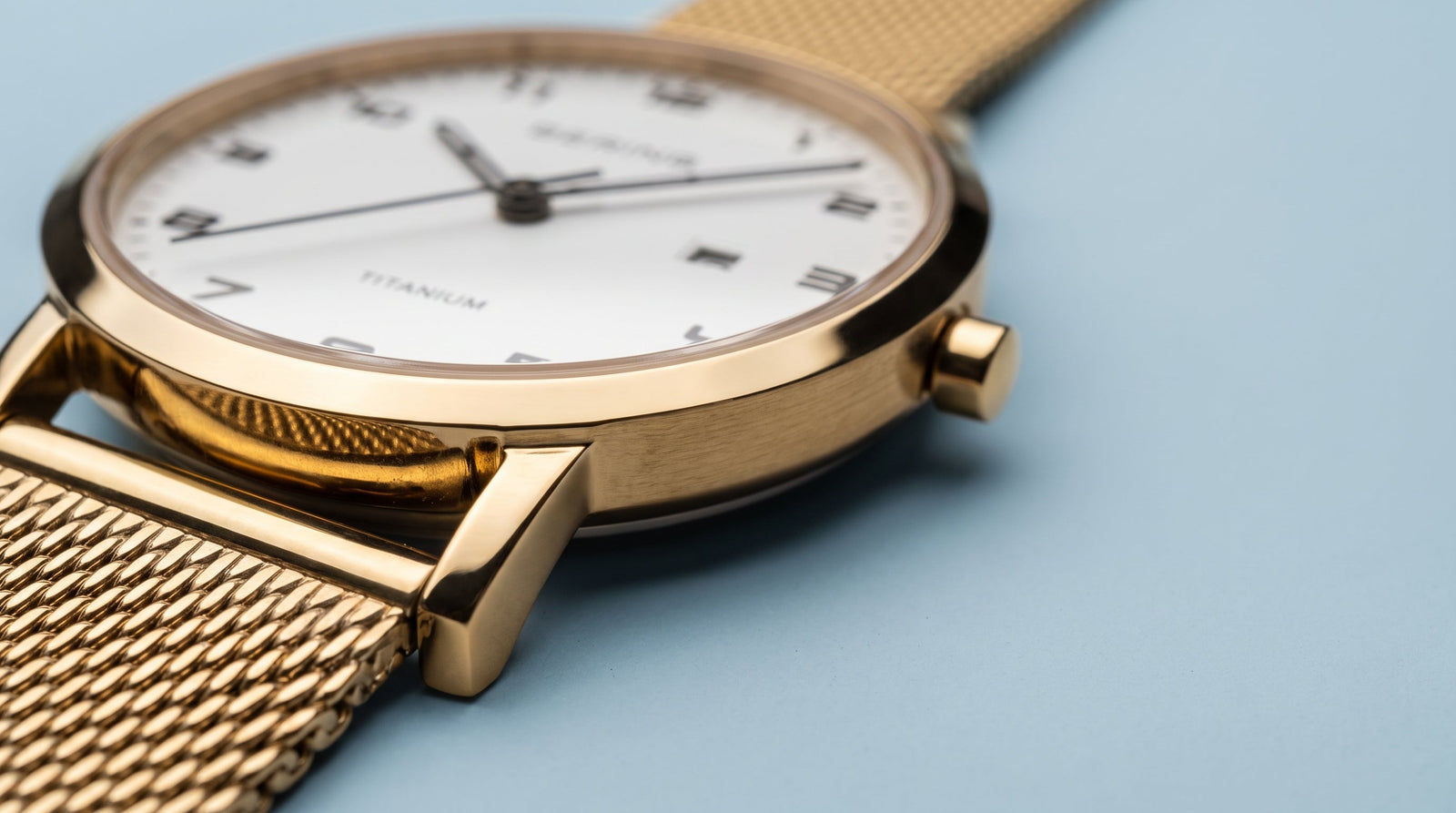

Anyone looking for a Bering watch for women will initially find many similar-looking dials: slim, round, and without unnecessary prints. What lies behind this in terms of materials and technology remains unclear on many product pages. This article categorizes the four main Bering lines according to their materials, strap options, and the occasions for which they are suitable. The basis for this is the technical data of the models carried by uhren4you.de, not a wear test.
The reason for this overview is specific: the Summer 2026 season brings unisex collections from several brands with reduced dials and gender-neutral proportions. Bering adopted this direction early on and offers women's models that cater to both slimmer wrists and slightly larger cases. This makes the brand a useful benchmark for anyone who wants to understand what reduced watch design means technically.
Bering as a brand: Denmark's watch philosophy in the context of the assortment
Bering is a Danish watch brand founded in 2008 that derives its design language from the aesthetics of the Arctic landscape: little color, clear lines, flat cases. In the uhren4you.de assortment, Bering is the second-strongest wristwatch brand after Festina with around 825 items. This shows that the models work in a wide price and occasion corridor, from everyday watches under 100 euros to ceramic and solar models in the mid-three-digit range.
Technically, Bering relies on quartz movements, which makes sense for the target group: quartz is significantly ahead of automatic in terms of power reserve and does not require daily winding. The watches are not mechanical collector's items, but everyday instruments with a polished surface. Those who want to know the background to self-winding movements will find a detailed explanation in the article Automatic watches for beginners: What self-winding means in everyday life.
Materials in detail: Titanium, stainless steel, and ceramic on the wrist
Bering uses three case materials that differ significantly in terms of wearing comfort, weight, and scratch sensitivity. An overview:
| Material | Weight | Skin compatibility | Scratch behavior |
|---|---|---|---|
| Stainless steel 316L | medium weight | good, nickel-free possible | scratches can be polished |
| Titanium | very light (approx. 40% lighter than steel) | very good, hypoallergenic | scratches harder to polish |
| High-tech ceramic | light to medium | very good | extremely scratch-resistant, but brittle |
Stainless steel 316L
Grade 316L stainless steel is the standard in the watch industry. The designation 316L stands for a particularly corrosion-resistant, low-carbon steel, which is also called "surgical steel" because it is used in surgical instruments. For a watch, this means: stable, sweat-resistant, and easy to process. Minor scratches can largely be removed by polishing.
Titanium
Titanium is about 40 percent lighter than stainless steel and at the same time so hard that it is used in aerospace. On the wrist, the weight is noticeable after a few hours, especially with a slim wrist. Titanium is naturally hypoallergenic because it does not form chemical compounds with the skin. A disadvantage: the surface shows scratches more strongly than polished steel, and repolishing is more complex. Those who wear titanium watches regularly get used to the fact that the surface develops a patina of use.

High-tech ceramic
The ceramic used by Bering is not clay, but a sintered material based on zirconium dioxide. It is significantly more scratch-resistant than steel, but also more brittle: in the event of a hard impact on an edge, the case can break, whereas steel would bend. For office and everyday life without the risk of falling, this is not a problem. The surface retains its color and shine for a very long time without maintenance.

Sapphire crystal as standard: why Bering also uses it in the entry-level range
Almost all Bering models, even those under 100 euros, are equipped with sapphire crystal. This is not a matter of course: in the entry-level range, many manufacturers rely on mineral glass, which is cheaper to produce but gives way to scratches. Sapphire crystal is the second hardest material on the Mohs hardness scale after diamond and shows hardly any scratches from keys, rings, or rough surfaces in everyday life.
The price for this durability is brittleness: a hard, point-like impact can shatter sapphire crystal, while mineral glass gives way in some situations without breaking. In daily use without targeted blows, sapphire crystal is clearly at an advantage. What this means for the connection between glass and water resistance is explained in the magazine article Sapphire crystal, mineral glass, Hardlex: thinking about watch glass and water resistance together in more detail.

Strap selection and interchangeable systems: Mesh, leather, silicone in comparison
The strap determines the look of a watch more than almost any other detail. Bering offers three main strap types across its collections:
| Strap type | Typical name at Bering | Strengths | Limits |
|---|---|---|---|
| Milanese (Mesh) | Milanese strap | elegant fit, infinitely adjustable, no sweat accumulation | hairs can get caught |
| Leather (calfskin) | Calfskin strap | soft, classic, light | sensitive to moisture and sweat |
| Link bracelet | Stainless steel link bracelet | robust, durable, dimensionally stable | heavier, less flexible in fit |
The Milanese strap, a finely woven mesh of steel wires, is particularly common at Bering. It hugs the curve of the wrist well and can be adjusted infinitely via a sliding clasp, which works equally well for slim and wider wrists. The calfskin strap is suitable for drier environments and more formal occasions, but should not come into contact with water permanently.
For many Bering models, the strap can be changed without tools, which has the advantage that a watch with two straps offers significantly more variety. The system works via a push button or a simple slider on the strap insert. How compatible the straps of different collections are with each other should be checked before buying a replacement strap for the respective model, as the lug width varies.
Suitable occasions: from everyday life to gifts
Bering women's watches are so restrained in their design language that they rarely look out of place. This has a practical background: a slim, monochrome dial without chronograph pushers or bezels with markings fits into almost any outfit without dominating.
For everyday office life, the stainless steel and titanium models are the most robust because they tolerate shocks and brief contact with water. Leather strap models are suitable for meetings and evening events, but should not be worn during sports. The ceramic line looks more formal and is suitable for elegant occasions where the surface should show its quality over months.
As a gift, the Solar line is interesting because it does not need a battery change: the dial charges via a solar cell under the glass, which uses both artificial light and daylight. Anyone looking for more details on Bering in a professional context will find a more detailed classification in the article Business style: elegant Bering watches for everyday life. For gift ideas for special moments, there is also an independent article on Women's watches as gifts for special occasions.

Price ranges and model groups at a glance
Bering structures its assortment into clearly named lines. The following table shows how these lines can be roughly classified into the price and material spectrum:
| Line | Main case material | Price range | Special feature |
|---|---|---|---|
| Classic | Stainless steel 316L | under 100 euros to approx. 100 euros | Milanese and leather strap, wide color palette |
| Titanium | Titanium | approx. 90-130 euros | particularly light, hypoallergenic |
| Ceramic | High-tech ceramic | approx. 120-160 euros | permanently scratch-resistant, elegant look |
| Solar | Stainless steel | approx. 140-180 euros | no battery change necessary, all solar models on beringtime.com |
The Classic line is the entry into the brand and shows that sapphire crystal does not have to be a luxury feature. The Titanium line is aimed at wearers who have sensitive skin or want to wear a watch all day without noticing it. Ceramic makes sense for those who want to buy a watch and wear it for many years without visible aging. Finally, Solar appeals to buyers who appreciate the convenience of not having to worry about the drive.


