


Festina vs. Citizen: A Comparison in the Under 300 Euro Price Range
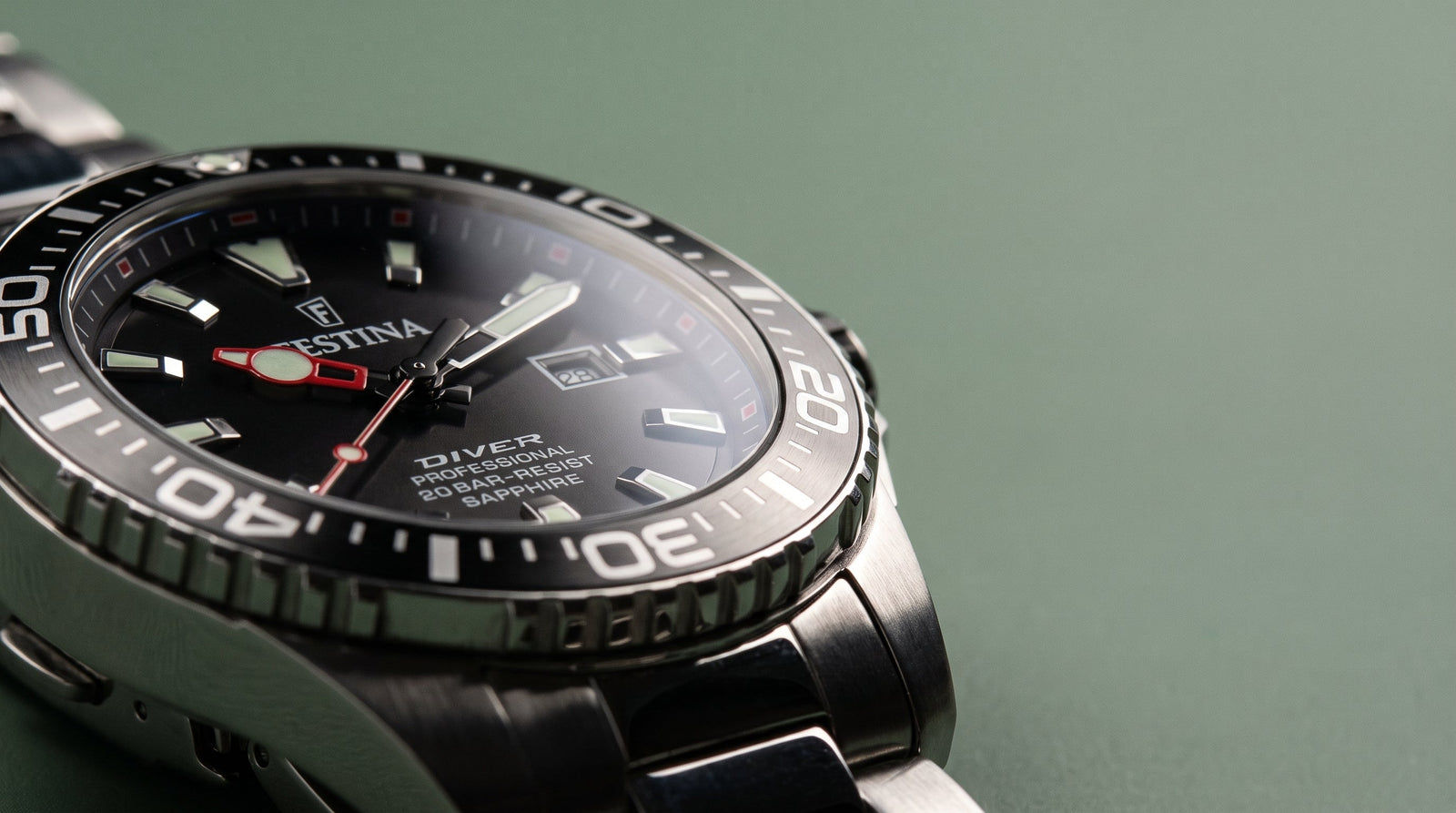

Anyone looking for a men's watch under 300 euros will quickly come across two names: Festina and Citizen. Both are firmly established in the mid-price segment, both offer a wide range of products, and both are equipped with genuine technical arguments. The question of which brand is the better choice cannot be answered in a single sentence, as the differences lie in the details: movement type, case material, glass type, and water resistance. This article compares the data sheets, not opinions.
The basis for this comparison is the models from both brands carried in the uhren4you range, as well as publicly available manufacturer information. Anyone unsure which price segment is right for them will find a good starting point in the article Men's watches under 300 euros: What the upper mid-range offers as a good introduction.
Two volume brands in one price segment: What it's all about
Festina is a Spanish brand with production in Asia and a long-standing partnership with cycling, particularly the Tour de France. This is reflected in their range: sporty chronographs, robust case shapes, and a wide selection of colors. Citizen is a Japanese manufacturer with its own movement production and the Eco-Drive drive as a central feature. Eco-Drive is Citizen's proprietary solar system: the watch charges its battery via any light source and does not require a classic disposable battery. Both brands have several hundred models in the uhren4you range, with Festina even offering over 1,000 items. The price range up to 300 euros covers the clear focus for both brands.
Festina: Range breadth, movement types, and typical case shapes
In the lower and mid-price segment, Festina relies almost exclusively on quartz movements. The manufacturer sources standard movements from various suppliers; the calibers are usually unobtrusive and reliable. Those looking for a specific caliber will sometimes find it in the product description and sometimes not: Festina communicates calibers less consistently than, for example, Citizen.
The case shapes range from classic round cases to angular sports cases. Typical diameters are between 40 and 45 mm. The Diver Professional line shows how far Festina goes into technical segments: sapphire crystal, 20 bar water resistance, and a stainless steel case are standard there. For lovers of mechanical watches, there is a Swiss Made series with an automatic movement, but it hits the upper price limit of the range under consideration. In the segment up to 200 euros, quartz chronographs and occasional solar models dominate at Festina.
Festina also offers titanium cases in individual lines: titanium is lighter than stainless steel and more skin-friendly for sensitive skin because it does not release nickel. This makes these models interesting for wearers with metal allergies.


Citizen: Eco-Drive as the core, calibers, and material selection
Citizen's most important argument in the price range up to 300 euros is Eco-Drive. The system converts light, whether sunlight or artificial light, into electrical energy via a solar cell under the dial and stores it in a rechargeable battery. A fully charged battery lasts for several months of operation in the dark, depending on the caliber. The battery has a stated service life of around ten years, after which it must be replaced by a specialist retailer.
Citizen's new 38 mm dress watches with the E116 caliber show how consistently the brand is expanding the Eco-Drive segment even in smaller case sizes and below the 200-euro mark. The E116 caliber is a pure quartz movement with solar charging without additional functions such as radio control or a chronograph. Citizen communicates calibers much more transparently than Festina: almost every model has a caliber specification in the product data.
In terms of materials, Citizen uses stainless steel as standard. Titanium is available in individual lines and is often treated with a Super Titanium coating, which hardens the surface against scratches. Sapphire crystal is more often standard in the mid-price segment at Citizen than at Festina in a comparable price range.

Anyone wanting to delve deeper into the topic of solar watches will find a detailed explanation of the technology and a market overview in the article Solar watches for men: Technology, brands, and buying guide.
Technical direct comparison: Movement, glass, water resistance, case diameter
The following table summarizes what the data sheets of both brands show on average in the price range up to 300 euros. Individual models deviate upwards or downwards.
| Feature | Festina (typical) | Citizen (typical) |
|---|---|---|
| Main movement type | Quartz | Quartz / Eco-Drive (Solar) |
| Caliber transparency | low to medium | high |
| Glass type (entry-level) | Mineral glass | Mineral glass |
| Glass type (mid-range) | Sapphire crystal (selected lines) | Sapphire crystal (frequent standard) |
| Case material | Stainless steel, titanium (individual lines) | Stainless steel, titanium (with hardening) |
| Case diameter | 40-45 mm | 38-44 mm |
| Water resistance (standard) | 3-10 bar | 3-10 bar |
| Water resistance (sports lines) | up to 20 bar (Diver Professional) | up to 20 bar (Promaster) |
| Battery change required | yes (quartz models) | no (Eco-Drive) |
For classification of water resistance ratings: 3 bar means splash water and occasional hand washing, 10 bar allows swimming, 20 bar is designed for scuba diving. The rating in bar is not a depth promise, but a test pressure under static laboratory conditions.
Sapphire crystal vs. mineral glass
Sapphire crystal is synthetically produced corundum and is significantly more scratch-resistant than mineral glass. It is almost impossible to scratch, but it is more prone to breaking upon impact than mineral glass, which has more elasticity. Those who wear the watch daily and value visual perfection should choose sapphire crystal. Those who frequently bump into hard objects are sometimes better served with mineral glass. A more detailed comparison of glass types can be found in the article Sapphire crystal, mineral glass, Hardlex: Thinking about watch glass and water resistance together.
Which brand suits which user profile
The decision between Festina and Citizen depends less on the price than on the question of what you expect from the watch.
| User profile | Recommendation direction | Reasoning |
|---|---|---|
| Wearer who values maintenance-free operation | Citizen Eco-Drive | No battery change, battery lasts about ten years |
| Sporty style, chronograph desired | Festina | Wide range of chronographs in the mid-price segment |
| Diving, intensive water contact | Festina Diver Professional or Citizen Promaster | Both available with 20 bar |
| Metal allergy / lightweight bracelet | Festina Titanium or Citizen Titanium line | Titanium is nickel-free and lighter than stainless steel |
| Mechanical watch desired, budget up to 300 euros | Festina Swiss Made | Automatic movement with sapphire crystal at the price range limit |
| Small wrist, simple dress watch | Citizen Eco-Drive (Caliber E116, 38 mm) | Smaller diameters, subtle dial |
Price range overview: What is realistic under 300 euros
Both brands cover the segment from just under 100 euros to the 300-euro limit, but with different density.
| Price range | Festina: what you get | Citizen: what you get |
|---|---|---|
| Under 100 euros | Quartz chronograph with mineral glass, stainless steel | Eco-Drive base models, mineral glass |
| 100-200 euros | Chronograph with sapphire crystal, first sports lines | Eco-Drive with sapphire crystal, titanium options |
| 200-300 euros | Diver Professional (20 bar, sapphire crystal), Swiss Made (automatic) | Promaster Sport, titanium with surface hardening |
Festina has a significantly wider range of chronographs in the price range under 200 euros than Citizen. Citizen scores in this area with the Eco-Drive guarantee: you buy once and don't have to worry about the power supply for years. Anyone who regularly forgets to change the battery or doesn't want to deal with this maintenance step is better off with Citizen. The article explains what a battery change costs and how it works Quartz watch care and battery change: What you can do yourself.

For a detailed overview of which other brands are represented in the upper price segment up to 300 euros and which technical standards apply there, the article is worth reading Men's watches under 300 euros: What the upper mid-range offers.
More information on the Festina range can also be found on the official Festina website.


