


Solar Watches for Women: Technology, Brands, and Buying Guide
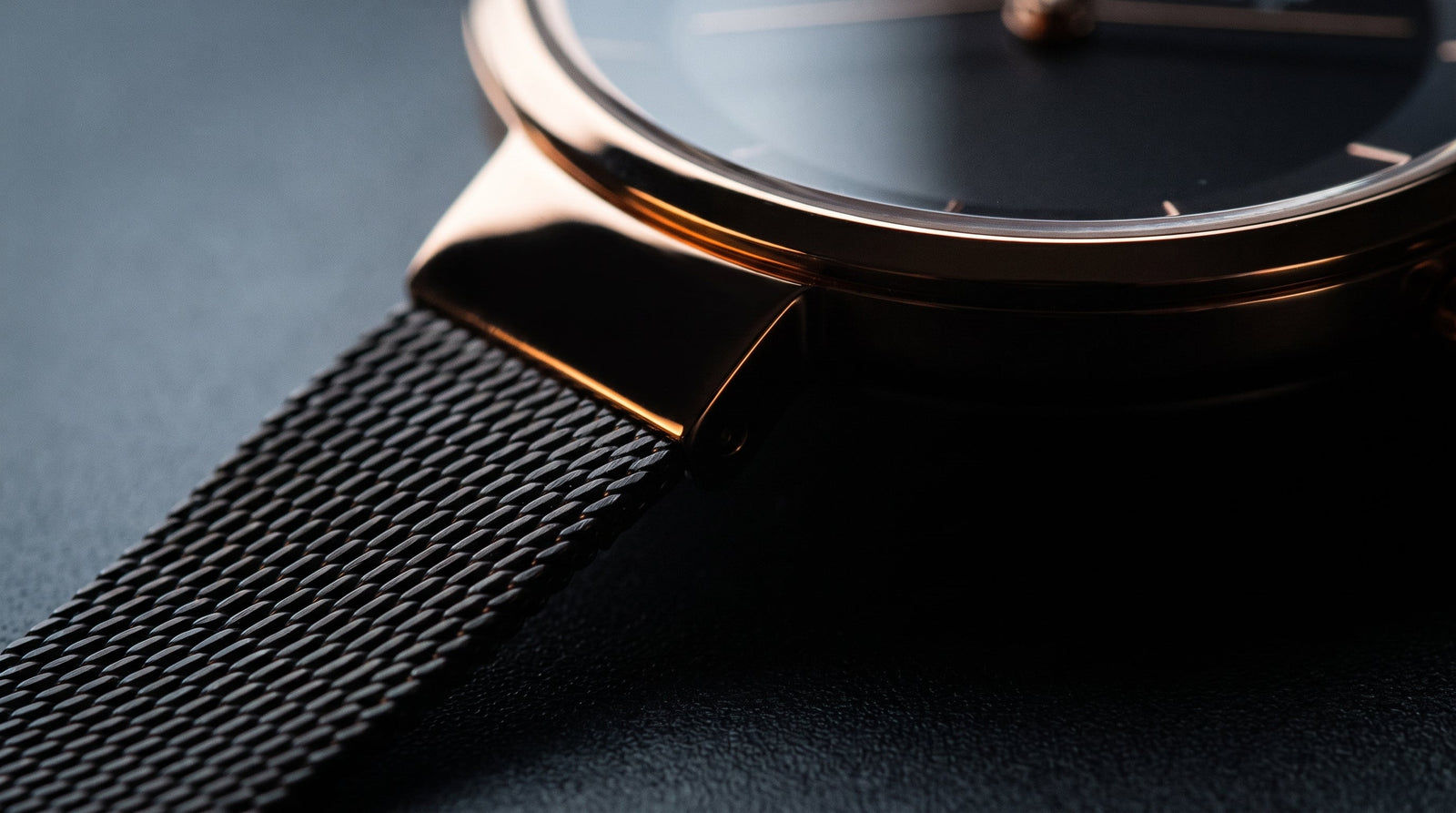

If you don't want the hassle of changing batteries but also don't want to wind a mechanical watch, you will sooner or later end up with solar watches. The principle sounds simple: light in, watch runs. But behind this simplicity lie differences that play a role in your purchase, from the size of the cell under the dial to the power reserve in prolonged darkness.
This article explains how solar technology works in women's watches, which purchase criteria are truly decisive, and which brands in the uhren4you range offer reliable solar women's watches. The assessments are based on the technical data of the catalog items, not on wearing experience.
How solar watches work: cell, battery, and charging logic
A solar watch contains a thin photovoltaic layer under the dial that converts visible light into electrical energy. This energy flows into a rechargeable lithium-ion battery that powers the quartz movement. Crucially, this is not a disposable battery, but a storage unit that is charged and discharged over the entire lifetime of the watch, typically over many years.
The charging logic varies by manufacturer. Citizen calls its system Eco-Drive, Seiko uses Solar, and Festina speaks of Solar Energy. Technically, they all work on the same basic principle but differ in the efficiency of the solar cell and the capacity of the battery. Direct daylight charges the fastest. Indirect daylight or artificial light charges more slowly, but measurably. In the dark, the watch draws power exclusively from the battery.
Important for practical use: Most solar watches display a charge indicator, either via a scale marking on the second hand or via a dedicated display. If the charge falls below a certain threshold, many models switch to an energy-saving mode: the second hand stops ticking, but the watch continues to run. If it is exposed to light again, it returns to normal operation in a few minutes.
Advantages and limitations compared to quartz with a battery
The obvious advantage of a solar watch is the elimination of battery changes. A normal quartz watch with a button cell needs a new battery every one to three years, depending on the movement. With a solar watch, this is unnecessary as long as the battery is intact. This is both practical and economically relevant if you own several watches.
| Feature | Solar watch | Quartz watch with battery |
|---|---|---|
| Energy source | Light (battery as buffer) | Disposable battery |
| Maintenance | No battery change required | Battery every 1-3 years |
| Accuracy | ±15 sec./month (typical) | ±15 sec./month (typical) |
| Power reserve in the dark | Several months (fully charged) | No dependence on light |
| Dial design | Must allow light to pass through | Freely designable |
| Battery life | Approx. 10-15 years (then replacement) | Battery replaceable at any time |
The accuracy of solar and battery-powered quartz watches is comparable. Both use an oscillating quartz crystal as a timer. Solar offers no technical advantage here over a good quartz watch.
A real disadvantage: The lithium-ion battery in a solar watch has a limited lifespan. After about 10 to 15 years, the capacity decreases. A replacement is possible, but requires a specialist workshop because the case seal must be opened. Anyone who takes this into account will not make a bad purchase decision.
Another point: The dial must allow light to pass through so that the solar cell underneath can work. This limits very dark or completely opaque dials. Mother-of-pearl, sunray finishes, and lighter shades work well. Completely black, matte dials measurably reduce light intake.
What buyers should look for: case size, charging time, power reserve
For women's watches, the consideration often starts with the case diameter. Many solar cells in women's models are smaller than in men's watches. A smaller surface area means less light yield per unit of time. This affects the charging speed and the achievable power reserve.
Case size
Slim women's watches with case diameters between 28 and 34 mm have a more compact solar cell. Models between 34 and 38 mm offer more surface area and generally charge faster to a comparable state of charge. If you frequently wear the watch under long sleeves or are generally exposed to little natural light, you should lean towards the larger variant or pay attention to the specified power reserve.
Power reserve
The power reserve with a full battery indicates how many months the watch will continue to run without any light source. Most Citizen Eco-Drive calibers for women are around six months, some newer ones over a year. Festina Solar Energy also states six months. This information is relevant if you store the watch in a drawer for a longer period.
Water resistance
Even with solar watches, the rule applies: 3 bar means splash protection, nothing more. 5 bar allows for brief submersion. If you wear the watch while swimming, you should choose at least 10 bar. The solar cell itself does not affect water resistance as long as the case is carefully sealed.

Citizen Eco-Drive for women: model groups and technical features
Citizen is the best-known manufacturer of solar watches and has continuously developed the Eco-Drive system since the 1970s. Several product lines are represented in the uhren4you range for women, which differ in size, complication, and material.
The basic principle of all Eco-Drive calibers: They convert every form of light, not just sunlight. An Eco-Drive caliber like the E031 or E110 also charges under office lighting, albeit more slowly. The caliber designation can be found in the data sheet of the respective item and provides information about the range of functions: time-only models without a date have slim calibers with a high power reserve. Models with a date and chronograph function require more energy and have correspondingly larger batteries.
| Eco-Drive type | Typical functions | Power reserve | Case size women |
|---|---|---|---|
| Classic (E031) | Time, date | approx. 6 months | 28-34 mm |
| Eco-Drive Hau (E110) | Time, no date, very flat | approx. 12 months | 26-32 mm |
| Eco-Drive Chrono (B023) | Time, date, stop function | approx. 6 months | 34-38 mm |
| Eco-Drive Radio (H804) | Time, date, radio reception | approx. 6 months | 32-36 mm |
A deeper insight into the Eco-Drive system is provided by the article Citizen Eco-Drive in focus: Why they are so popular. If you are specifically looking for a Citizen women's watch with more water resistance, you will find a concrete example with diver characteristics in the Watch of the week for the EO2023-00A.
Other brands in the range with solar women's watches
In addition to Citizen, Bering, Festina, and Danish Design offer solar women's watches in the range. They differ in design philosophy and technical details.
Bering focuses on Scandinavian minimalist design: narrow bezels, slim hands, clear dials. The solar collection from Bering often uses sapphire crystal, which is significantly more scratch-resistant than mineral glass, and stainless steel Milanese or mesh straps. The case diameters for women's models are usually between 29 and 35 mm.
Festina positions the Solar Energy line more in the classic bicolor range: stainless steel cases with gold IP finishing, crystal indices instead of baton indices, somewhat fuller in diameter. This appeals to a different customer than Bering's minimalism.
Danish Design offers an emphatically calm dial with few elements with its solar collection. The brand often combines this with sapphire crystal and light or gray dials that do not hinder light incidence for the solar cell.


Combination with jewelry: stainless steel, titanium, and ceramic as case material
Solar watches for women often come in materials that also match jewelry: stainless steel in silver or with gold IP coating is the most widespread. It is easy to care for, skin-friendly, and holds up well against scratches. Most solar women's watches in the mid-price range use 316L stainless steel, an alloy with a low nickel content.
Titanium is lighter than stainless steel and more hypoallergenic, but is found less frequently in women's solar watches and more often with Citizen in the higher price range. A titanium case weighs about 40 percent less than stainless steel for the same volume. This is a less noticeable difference for small women's watches than for large men's models, but a relevant factor for sensitive skin.
Ceramic appears occasionally, for example with Bering. Ceramic is extremely scratch-resistant but more brittle than metal in the event of strong impacts. Cases and straps made of ceramic appear matte and evenly colored without losing their polish. This visually matches jewelry made of similar material well.
Gold IP finishing is not gold plating in the classic sense, but a layer applied by ion deposition. It is thinner than galvanic gold plating, but harder and more uniform. With daily wear, it can peel off at contact points over the years. This is not a defect, but a material-related property that should be taken into account when purchasing.
Purchase checklist: What should be decided before buying
- Check the case diameter in millimeters, do not just estimate as S/M/L.
- Check the glass type in the data sheet: sapphire crystal is scratch-resistant, mineral glass is cheaper.
- Note the power reserve with a full battery, especially relevant if worn less frequently.
- Check water resistance in bar: 3 bar is enough for everyday splashes, not for sports in the water.
- Match case material to metal allergy: titanium or 316L stainless steel for sensitive skin.
- Check dial color for light transmission: mother-of-pearl and light tones charge better than very dark, matte surfaces.
- Look up the caliber designation in the data sheet to understand the range of functions.


