


Solar Watches for Men: Technology, Brands, and Buying Guide

The information in this article is based on product data from the uhren4you catalog as well as generally available technical specifications from the manufacturers. We are comparing data sheets, not wearing experiences.
How a solar watch works: An overview of light sources, cells, and battery technology
A solar watch uses a solar cell located under or around the dial that converts light energy into electrical energy. This energy charges a rechargeable lithium-ion battery that powers the quartz movement. The principle is the same as that of a solar-powered calculator, but adapted to the specific requirements of a watch: the battery must maintain sufficient capacity over months, and the movement must be extremely energy-efficient.
The solar cell
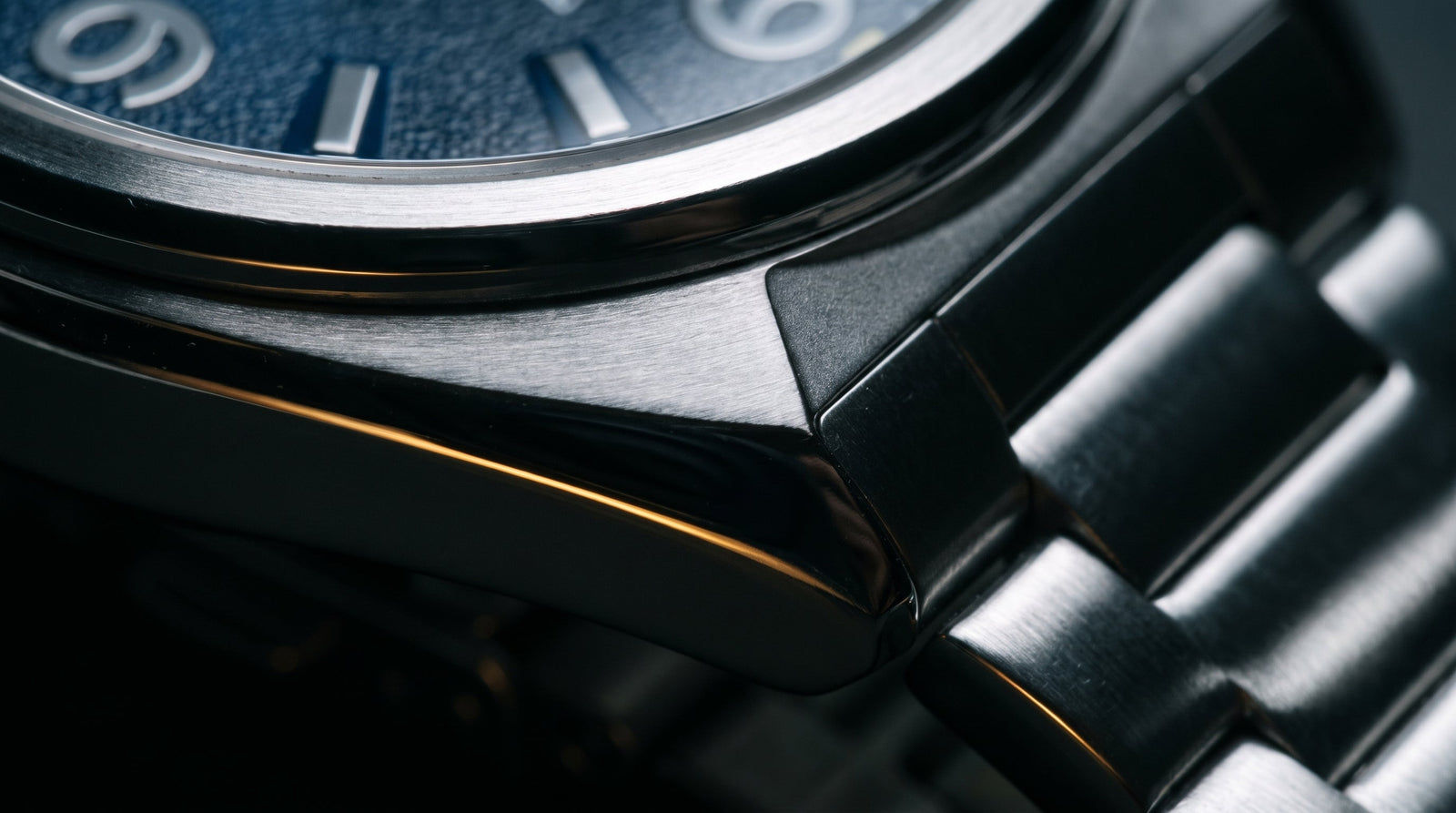
The solar cell is usually located directly under the dial and is visible through transparent or semi-transparent areas of the dial. Some manufacturers hide it almost completely behind a dark or textured dial. The cell consists of amorphous silicon, which reacts to a broader light spectrum than crystalline silicon, thus generating energy even in indirect light or artificial lighting.
The battery and power reserve
The battery of a solar watch is designed for a very large number of charge cycles. Manufacturers usually state ten years or more before the capacity noticeably decreases. Depending on the model, the power reserve in the dark ranges from 90 days to over a year. An energy-saving mode that stops the second hand further extends the reserve. As soon as the model receives light again, it automatically switches back to normal operation.
How much light does a solar watch actually need
The short answer: significantly less than many buyers assume. A solar watch charges in both direct sunlight and artificial light, albeit with very different efficiency.
| Light source | Light intensity (lux, approx.) | Charging time for 1 day of operation (approx.) |
|---|---|---|
| Direct outdoor sunlight | 50,000-100,000 lx | 2-3 minutes |
| Cloudy sky, shade | 1,000-10,000 lx | approx. 20-60 minutes |
| Office light (fluorescent tube) | 300-1,000 lx | 2-5 hours |
| Dimmed indoor light | under 300 lx | hardly any charge |
In normal everyday life, i.e., with a few hours of daylight on the wrist every day, the battery of a solar watch is permanently sufficiently charged. However, anyone who works in dark rooms for months and never holds the watch up to the light will eventually use up the power reserve. A simple test: If the model has an energy indicator, the charge level can be read directly.
Brands in comparison: Citizen Eco-Drive, Seiko Solar, and other providers
In the uhren4you range, Citizen and Seiko are the central brands for men's solar watches. Both have developed their own technologies that differ in detail.
Citizen Eco-Drive
Citizen has been operating its Eco-Drive technology since 1976 and has refined the system over decades. The special feature: Citizen states that their solar cells generate energy even under very weak light. In the uhren4you range, Citizen models are represented from the mid-double-digit range up to the higher triple-digit range, making it one of the largest brands in-house with 450 available items. The calibers in Eco-Drive models have a specific designation that is engraved on the case back and listed in the data sheet.

Seiko Solar
Seiko relies on its own solar calibers and also offers GPS-solar combinations with the Astron line: The movement receives GPS signals to correct the time automatically and worldwide. This makes these models technically more complex and priced accordingly higher. The range includes 349 Seiko models, a relevant proportion of which are solar.

Other providers
With the G-Shock and Edifice lines, Casio offers solar-radio combinations that are particularly common in the outdoor and sports segment. The solar function is often combined there with multi-band reception for automatic time correction via radio, which offers a similar gain in convenience as GPS-solar, although limited to the reception areas of radio signal stations. Lorus, as a more affordable sister brand of Seiko, offers solar models in the entry-level segment. A more detailed look at Citizen is worth it via our article Citizen Eco-Drive in focus.
| Brand | Technology | Special feature | Price range in the assortment |
|---|---|---|---|
| Citizen | Eco-Drive | wide range of models, many case sizes | under 100 to over 300 euros |
| Seiko | Seiko Solar / Astron GPS-Solar | GPS time correction for the Astron line | mid to high triple-digit range |
| Casio | Solar (often combined with radio) | Multi-band reception, robust G-Shock cases | under 100 to mid triple-digit range |
| Lorus | Solar | Entry-level prices, clear dials | under 100 euros |
Water resistance and glass types for solar watches: what outdoor use requires
Solar watches are often chosen for an active everyday life, which is why water resistance is a key purchasing criterion. The rating in bar corresponds to the static test pressure, not the actual diving depth. A watch with 3 bar is protected against splashes but is not suitable for swimming. 10 bar allows for swimming and snorkeling, but not scuba diving. The Citizen AW1571-76L in our range is rated at 10 bar, which is sufficient for most everyday situations and water sports.
There are three common types of glass for solar watches: Mineral glass is more scratch-sensitive than sapphire crystal but lighter and cheaper. Sapphire crystal is significantly more scratch-resistant but more prone to cracks upon heavy impact. Hardlex is Seiko's own mineral glass treatment and sits in the middle. Anyone who wears the watch regularly in a rough environment should prefer sapphire crystal. Our article explains more about the differences Watch glass in comparison: Mineral, Hardlex, or Sapphire. For questions about water protection in general, it is also worth taking a look at the article Water resistance explained.
Case materials and strap options: Titanium, stainless steel, rubber
The case material significantly influences the weight, skin compatibility, and longevity of a solar watch in everyday life.
Stainless steel
Stainless steel (316L) is the most common material and offers a good balance of scratch resistance, weight, and price. However, stainless steel is noticeably heavier than titanium for larger cases. For nickel allergy sufferers, stainless steel is generally unproblematic as long as it is surgical steel, which is the case with most brand models.
Titanium
Titanium is about 40 percent lighter than stainless steel with comparable hardness. This makes titanium particularly interesting for large-format sports watches that would otherwise cause fatigue on the wrist. Titanium is also hypoallergenic and therefore suitable for sensitive skin. The Seiko Astron model in our range uses titanium, which makes sense for a chronograph with a GPS module because the total weight would otherwise become significant.
Strap options
Men's solar watches are available with metal, leather, rubber, and nylon straps. Rubber and silicone are water-resistant and therefore obvious choices for sports models. Leather is comfortable on the wrist but does not tolerate constant contact with water and tends to sweat more in summer. Metal bands are robust but heavier. Many models offer interchangeable straps, which has the advantage that you can wear the same case in different contexts.

Price ranges and what they offer: under 100 euros to 500 euros
The uhren4you range includes men's solar watches from under 100 euros to the high triple-digit range. The price range primarily determines the quality of the materials used, the additional functions, and the precision of the workmanship.
| Price range | Typical features | Suitable for whom |
|---|---|---|
| Under 100 euros | Mineral glass, stainless steel or plastic case, simple solar calibers, up to 5 bar | Beginners, everyday watch with low material requirements |
| 100-200 euros | Mineral glass or Hardlex, stainless steel, 10 bar, first additional functions (date, chronograph) | Sporty, active everyday life, wide brand selection |
| 200-350 euros | Often sapphire crystal, stainless steel or titanium, 10 bar, chronograph or world time function | Those who pay attention to material quality and want to wear the watch for a long time |
| 350-500 euros | Sapphire crystal, titanium, GPS-solar or radio-solar combination, 20+ bar | Frequent travelers, outdoor users with high demands |
Below 100 euros, solar watches are technically fully functional, but the materials are simpler: mineral glass instead of sapphire crystal, thin cases, rarely more than 5 bar water resistance. In the 100-200 euro range, there is the strongest selection in the range. From 300 euros, titanium and sapphire crystal become the standard combination. GPS-solar functions start in the range from the upper triple-digit area and justify their extra cost for people who regularly change time zones.
Checklist: What to look for in a men's solar watch
- Power reserve in the dark: At least 90 days for normal use, 180 days or more for travelers without much daylight.
- Energy indicator present: Provides a direct indication of the charge level, saves guesswork.
- Water resistance: 10 bar for swimming, 20 bar or more for diving and water sports.
- Glass type: Sapphire crystal from the mid-triple-digit range, mineral glass or Hardlex for entry-level.
- Case diameter: 40-44 mm is the most common range for men's models. Larger than 46 mm looks bulky on a slim wrist.
- Strap interchangeable: Practical if you want to wear the watch in different contexts.
- Caliber specification in the data sheet: Can be researched and shows how service-friendly the movement is in the long term.


