


Sports watches for men: Which technology for which activity
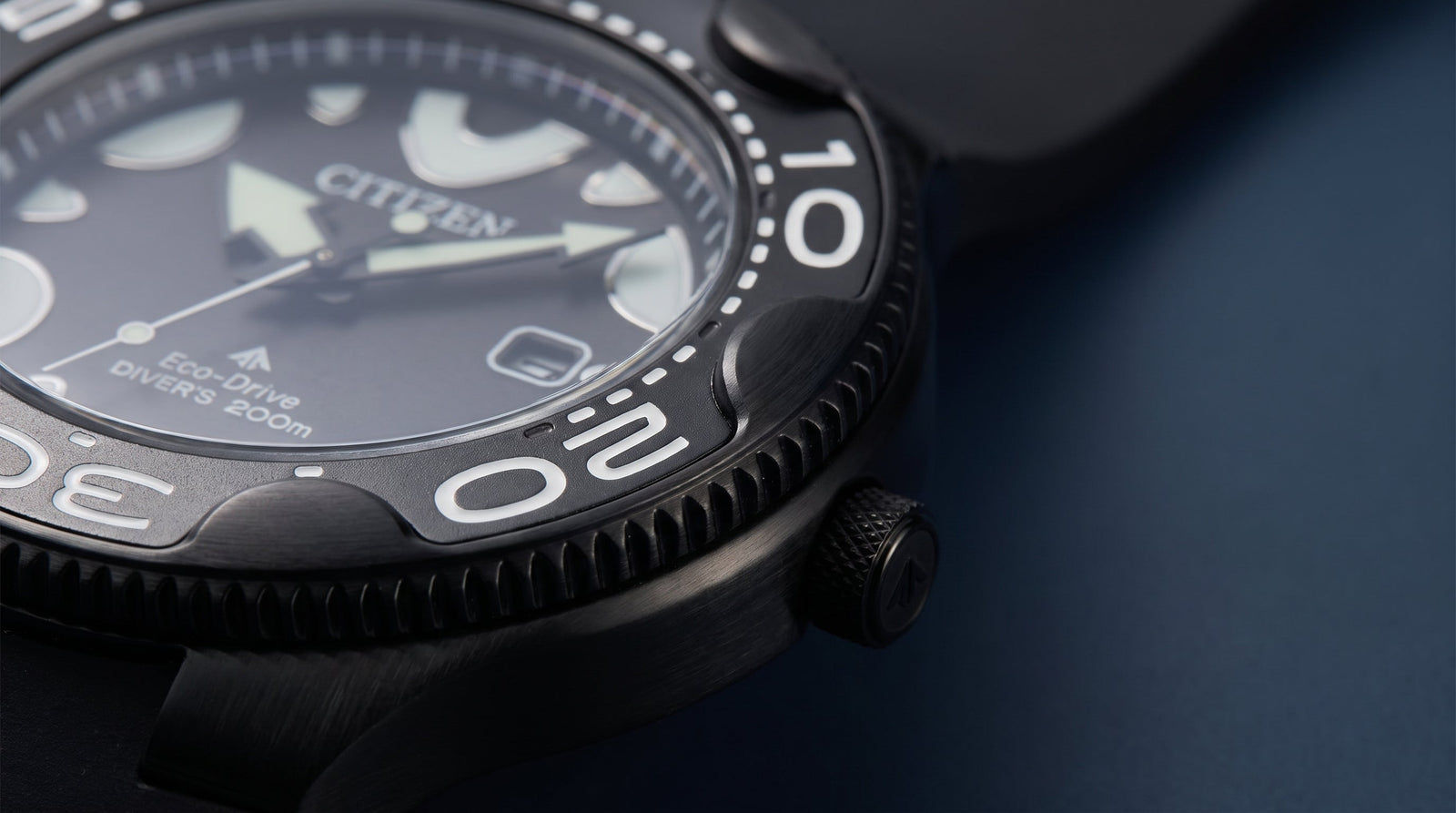

Anyone looking to buy a sports watch faces a wide range of options, from simple outdoor watches to ISO-certified diver's watches. The question is not which watch is the most robust, but which technical features suit the planned activity. A chronograph for cycling has different requirements than a diver's watch for a beach vacation, and an outdoor watch for hiking and climbing differs from both in its choice of glass and case design.
This article compares the technical data from the product sheets in our range and explains which specifications actually matter in practice. It is aimed at men who are looking for a wristwatch for sports and leisure and want to understand what the numbers on the data sheet mean.
What distinguishes a sports watch from an everyday watch
An everyday watch tells the time reliably and looks neat while doing so. A sports watch must also do this, but it additionally comes into contact with stresses that an office model never encounters: impacts, water ingress, UV radiation, sweat, and temperature fluctuations. The technical differences can be summarized in four categories.
Shock resistance: Sports cases have thicker case backs, air or rubber buffers between the movement and the case, and reinforced crown protection devices. In its G-Shock line, Casio builds a multi-layered case that absorbs shocks through material distribution instead of passing them directly to the movement.
Water resistance: While everyday watches are often only rated at 3 bar, serious sports models start at 10 bar. The difference is practically significant, as the next section shows.
Legibility: Large luminous hands, tritium tubes, or printed contrast indices ensure readability in poor light and underwater. Luminox consistently uses tritium gas tubes that glow faintly for up to 25 years without needing to be charged.
Strap and crown: Rubber and synthetic straps handle water, salt, and sweat better than leather. Screw-down crowns prevent water from being forced through the crown when pressure increases, which is not the case with standard push-in crowns.
Water resistance for swimming, diving, and water sports
The bar rating describes the static test pressure in a laboratory, not the actual diving depth. This is an important distinction that often leads to misunderstandings when making a purchase decision. Movement in water creates dynamic pressure that significantly exceeds the static rating.
| Water resistance | Permitted | Not suitable for |
|---|---|---|
| 3 bar / 30 m | Splashing, washing hands | Swimming, diving |
| 5 bar / 50 m | Surface swimming | Jumping, diving |
| 10 bar / 100 m | Swimming, snorkeling, water sports | Scuba diving |
| 20 bar / 200 m | Scuba diving, freediving | Deep diving over 40 m |
| ISO 6425 certified | Professional diving up to certification depth | Limited only by the standards of the norm |
The ISO 6425 standard defines diver's watches in a binding manner: at least 100 bar test pressure, a luminous bezel (the rotating ring on the edge of the case that serves as a dive time counter), legibility from a distance of 25 cm, and magnetic field resistance. Only watches with this certification are tested for scuba diving. A more detailed classification of all protection classes with practical examples can be found in a separate article.


Case and glass: Mineral glass, sapphire, and acrylic glass compared
The glass is the most vulnerable component of a sports watch because it is exposed and is the first thing to hit during an impact. Three materials dominate the market, with clearly different strengths.
Mineral glass
Mineral glass is tempered window glass. It is more scratch-resistant than simple glass but softer than sapphire. In the event of a heavy impact, it is more likely to splinter than to break. It is the most common choice in the mid-price segment because it is easy to polish and cheap to replace.
Sapphire crystal
Sapphire crystal is synthetically grown corundum (hardness level 9 on the Mohs scale, just below diamond). It is virtually immune to scratches in everyday life, but it splinters more sharply than mineral glass under point pressure. Sapphire crystal is standard in high-quality sports watches such as the Luminox Automatic Sport Timer or the Citizen Promaster BY3006-53H. The surcharge compared to mineral glass is factored into the case price and is justified for intensive use.
Acrylic glass (plastic)
Acrylic glass is flexible and does not shatter upon impact. It scratches easily, but can be smoothed out again with polishing paste. Casio G-Shock models in the lower price segment sometimes use acrylic because the shock absorption of the case is more important than the scratch resistance of the glass.
| Glass type | Scratches | Impact | Repair | Typical price level |
|---|---|---|---|---|
| Plastic (acrylic) | Sensitive | Good (flexible) | Polishable | Entry-level |
| Mineral glass | Medium | Medium | Replacement necessary | Mid-range |
| Sapphire crystal | Very good | Tendency to splinter | Replacement necessary | Upper mid-range+ |
For water sports and diving, sapphire crystal is the most sensible choice because sand and coral will permanently damage the glass if it is soft. For mountain sports and climbing, where point impacts against rock are more frequent, mineral glass is an acceptable compromise.
Chronograph and other complications: what sports users really use
A chronograph is a stopwatch integrated into the watch, which is started, stopped, and reset via pushers on the edge of the case. A chronometer, on the other hand, is a quality designation for particularly accurate movements (COSC standard: maximum 4 seconds deviation per day). The terms are often confused in retail.
The following complications are practically relevant for sports.
Chronograph: Useful for cycling, running, timed swimming, and interval training without a smartphone. The Festina Chrono Bike line is designed for cycling use and offers 10 ATM water resistance, which easily withstands sweat and rain.
Rotating bezel: On diver's watches, the clicking bezel indicates the elapsed dive time. On pilot's watches and field watches, it is used for time calculations. On diver's watches, the direction of rotation is deliberately limited to counter-clockwise: accidental turning then shows less time remaining instead of more, which is on the safe side.
Radio-controlled and solar: For outdoor use, where manually setting the watch is cumbersome, radio-controlled watches with time signal reception (DCF77 in Europe, other signals for other regions) and solar-powered movements (Eco-Drive by Citizen) are a sensible combination. Technology, range, and limits of solar and radio-controlled movements is explained in a separate article.
Bluetooth and fitness tracking: The Casio G-Shock GBD-300-1ER combines a step counter and smartphone connectivity with the G-Shock case. This is useful for light endurance sports and everyday life, but does not replace a dedicated GPS device for orienteering.


Brands at a glance: Casio, Luminox, Festina, and Citizen for sporting requirements
The range includes several brands with a clear sports focus. The following four cover different segments.
Casio
Casio is represented with around 410 models in the range and offers the widest price spectrum in the sports sector. The G-Shock line stands for shock-resistant quartz movements with a wide range of functions in the entry-level and lower mid-range segment. For outdoor use, where robustness takes precedence over aesthetics, Casio is the obvious first choice.
Luminox
Luminox (169 models in the range) comes from the US military procurement environment and consistently uses tritium gas tubes for self-illuminating hands and indices. The CARBONOX case of the Leatherback Sea Turtle line is lighter than stainless steel while being chemical-resistant. Luminox is priced in the mid-three-digit to low-four-digit range and is aimed at wearers who appreciate comfort and low weight in addition to robustness.
Festina
Festina (over 1,070 models, the strongest brand in the range) provides chronographs specifically for cycling with the Chrono Bike line, including an official partnership with the Vuelta a España. The models are in the mid-three-digit range and combine stainless steel cases with quartz chronographs and 10 ATM water resistance, which is sufficient for cycling and running, but does not allow for diving.
Citizen
Citizen (450 models) is the brand for technically sophisticated solar and radio-controlled models. The Promaster line covers diving, flying, and outdoor activities. The Eco-Drive principle converts any light source into energy and eliminates the need for battery changes. The E168 caliber of the Promaster BN0235-01E and related movements are ISO 6425-tested diver's watches, which goes beyond a mere water resistance rating.


Checklist: How to find the right sports watch for men
- Define main activity: Diving, swimming, water sports, cycling, running, and outdoor activities have different requirements. A watch that is supposed to do everything is often not optimal in any discipline.
- Choose water resistance according to use: Swimming requires at least 10 bar, scuba diving at least an ISO 6425 certification. Anything less is not a sensible compromise.
- Weigh glass type against usage risk: Frequent contact with sand, rock, or equipment speaks for sapphire crystal. Those who prioritize shock protection over scratch resistance should choose mineral glass or acrylic.
- Check case material: Stainless steel is heavier; Carbonox (Luminox) and plastic cases are lighter. For long sports sessions, weight makes a difference.
- Check crown and strap: Screw-down crown is mandatory for water sports. Rubber or silicone strap for damp environments, stainless steel strap for everyday life and light sports.
- Assess illumination: Tritium tubes (Luminox) glow permanently without needing to be charged. Luminescent Superluminova on hands and indices must be exposed to light before use.
- Movement type for usage profile: Quartz is more accurate than automatic, solar eliminates battery changes, radio-controlled synchronizes automatically. Automatic movements require regular wear or a watch winder to keep them running.
- Check case diameter on the wrist: Sports watches are often 44-48 mm. Those with a wrist circumference of less than 17 cm should also consider models under 43 mm.


