


AMS Wall Clocks: An Overview of German Clockmaking Tradition
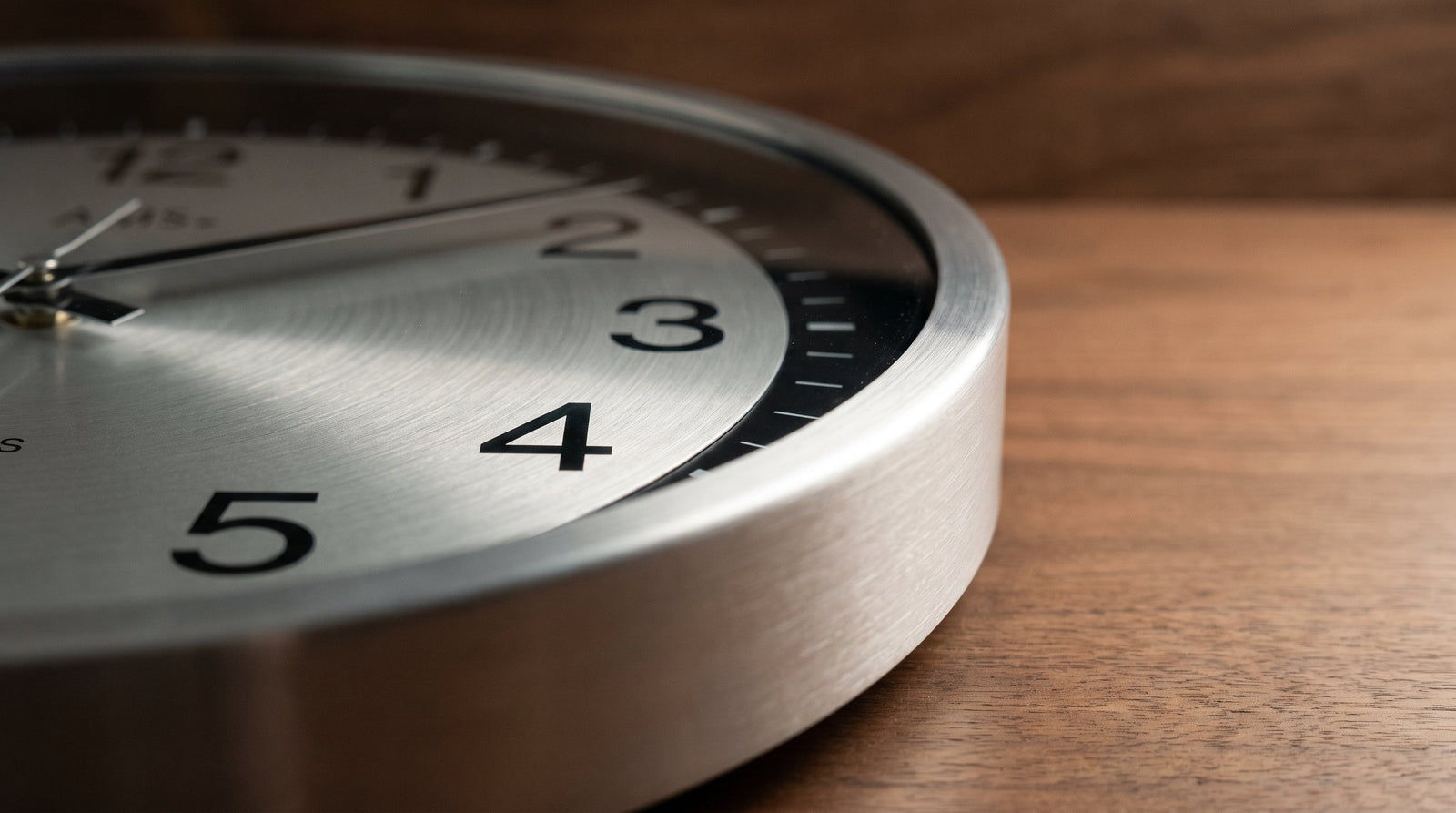

Anyone looking to buy a wall clock will mostly find large catalog sites and very little concrete expertise online. With 743 items, AMS is one of the most widely represented brands in the uhren4you range, with a selection spanning from simple radio-controlled clocks under 100 euros to mechanical regulators in the four-digit range. This article categorizes the range by movement type, style, size, and function, so that your purchasing decision is based on facts rather than photos.
The following sections compare technical specifications from the product fields, not subjective impressions. If you already know what a radio-controlled movement or a pendulum movement is, you can jump straight to the relevant section. If you are not yet familiar with these terms, they will be explained upon their first appearance.
AMS as a brand: Origin, range, and price points at a glance
AMS stands for the AMS-Uhrenfabrik, which is based in Furtwangen in the Black Forest, a region with over 180 years of watchmaking tradition. The company exclusively produces large clocks, such as wall clocks, pendulum clocks, and regulators, positioning itself very differently from wristwatch brands that occasionally add wall clocks to their range.
The range at uhren4you covers three price points, which are roughly separated by movement type and case material:
| Price range | Typical movements | Typical materials |
|---|---|---|
| Under 150 euros | Quartz, radio-controlled | Metal, plastic, MDF |
| 150 to 400 euros | Radio-controlled pendulum, quartz pendulum | Walnut wood, oak finish lacquer, natural stone |
| Over 400 euros | Mechanical chiming movement (8-day, 14-day) | Solid wood, aluminum finish, fossil structure look |
Important for orientation: The term "Made in Germany" is actually featured as a product characteristic for AMS, which is not a given for wall clocks in this price range.AMS describes itself as a clock manufacturer with over 180 years of company tradition.

Quartz, radio-controlled, and pendulum: which movement types AMS offers
AMS relies on four movement types, which differ significantly in accuracy, maintenance effort, and price.
Quartz movement
A quartz movement is a battery-powered movement that uses a quartz crystal as a time base. It typically gains or loses less than a minute per month, is low-maintenance, and affordable. Most quartz movements from AMS are designed to be quiet, and some models are explicitly designated as "silent" or featuring a silent movement. Changing the battery every one to two years is the only maintenance step required.
Radio-controlled movement
A radio-controlled movement (not to be confused with Bluetooth or Wi-Fi) receives the time signal from the DCF77 transmitter in Mainflingen near Frankfurt. The transmitter broadcasts a coded time signal, which most AMS radio-controlled clocks automatically synchronize once a day, usually in the early morning hours. The result is an accuracy that could never be achieved by the clock itself: the deviation is practically zero as long as there is reception. Outside the DCF77 reception range (roughly Europe up to about 1,500 km around Mainflingen), the clock continues to run as a normal quartz movement but no longer synchronizes automatically. Reception can also be weak in basements or behind thick concrete walls.
Pendulum movement
A pendulum movement adds a decorative pendulum to a quartz or radio-controlled movement. In these models, the pendulum has no driving function; it swings electronically and serves purely aesthetic purposes. These are to be distinguished from mechanical regulators, where the pendulum actually controls the escapement and thus determines the power reserve.
Mechanical chiming movement (regulator)
The most expensive AMS models work with mechanical spring-driven movements and real pendulum movements. The power reserve is specified in days (8 days, 14 days), which means that the mainspring is completely run down after this time and must be wound manually. Historically, a regulator is a precision clock with separate hands for hours, minutes, and seconds. AMS adopts this case format but sometimes combines it with quartz or radio-controlled movements, which maintains the classic look while eliminating the need for winding.

Style categories: from minimalist to country house classic
The AMS range covers three style directions, which also differ slightly in price.
| Style | Features | Typical case materials | Matching interior |
|---|---|---|---|
| Modern/Minimalist | Large dial, minimalist indices or Arabic numerals, metal case | Aluminum, painted metal | Loft, office, open-plan kitchen-living area |
| Vintage/Retro | Metal case in brown or black, large numerals, patina look | Painted sheet metal, some wood accents | Industrial, country house, mixed styles |
| Classic/Traditional | Wood case, pendulum, Westminster chime, mineral glass | Walnut, oak, solid wood | Classic living room, hallway, library |

Size and wall space: which AMS models fit where
Wall clocks are often bought too small. As a rule of thumb, a clock on a free wall of about three meters wide should have a diameter of at least 40 cm so as not to look lost. In hallways and kitchens, where the viewing distance is short, 25-35 cm is sufficient.
| Model | Diameter / Format | Recommended room | Movement |
|---|---|---|---|
| AMS F5577 | Ø 50 cm | Living room, hallway, office | Radio-controlled |
| AMS F5949 | Ø 60 cm | Large living areas, reception areas | Radio-controlled |
| AMS W7492 | Medium format | Living room, children's room, kitchen | Quartz pendulum |
| AMS Regulator R2764/1 | Portrait format (regulator) | Hallway, library, living room | Mechanical, 14-day chiming movement |
Pendulum clocks and regulators also require sufficient height below the case so that the pendulum can swing freely. For most AMS pendulum models, this is at least 15-20 cm below the bottom edge of the case. If you want to hang the clock low over a chest of drawers, you should measure this distance beforehand.


Special functions: Westminster chime, night shut-off, silent movement
Three functions regularly appear in the AMS range and require a conscious decision before buying.
Westminster chime
The Westminster chime is a melody consisting of four ascending tones, originally famous from the clock tower of the Houses of Parliament in London. On AMS clocks, the full melody sounds on the hour, followed by the hour strike. Abbreviated versions of the melody sound on the quarter hours. Those who find this pleasant appreciate the acoustic structuring of the day. Those who find it disruptive should choose a clock without a chiming mechanism or with a shut-off option.
Night shut-off
The night shut-off deactivates the chiming mechanism at configurable times, typically between 10 p.m. and 7 a.m. It can be set manually and is particularly important if bedrooms are within earshot of the clock. Some AMS models offer light sensor control: the chiming mechanism turns itself off as soon as the room is dark. This option is more convenient because no fixed times need to be programmed, but it requires the room to actually become dark at night.
Silent movement
A silent movement (also called a sweep movement) moves the second hand in a smooth, continuous motion instead of a second-by-second tick-tock. This makes the movement run audibly quieter. In quiet bedrooms or offices, this can make all the difference. Not every AMS model is equipped with this; it is worth checking this product feature specifically.


Buying decision: Questions that should be answered before purchasing
The right starting point is not the model, but the room and your own requirements. The following checklist helps to systematically narrow down the selection.
- Measure wall space: Width of the free wall space and available height, also below the planned hanging position for pendulum models.
- Check reception environment: Is there DCF77 reception at the planned location? Basements, thick concrete walls, or large metal structures nearby can block reception. In this case, it is better to choose a pure quartz model that does not rely on reception.
- Clarify noise tolerance: Ticking in the bedroom? Then choose a silent or sweep movement. Westminster chime within earshot of the study? Then choose a night shut-off or no chiming mechanism.
- Winding commitment for mechanical clocks: An 8-day or 14-day movement must be wound regularly by hand. If you tend to forget this or find it annoying, you are better off with a radio-controlled or quartz movement.
- Match interior style: Walnut wood and pendulums do not fit in every room, and a metal case with a 60 cm diameter does not suit every dining room. The color and format of the clock should be compared against the room colors before buying.
- Consider glass type: Mineral glass is more scratch-resistant than acrylic glass, but less shatterproof under heavy impacts. For rooms with children, acrylic glass in a real glass look may make more sense.
If you have decided on a pendulum clock in a classic style, you can find an in-depth look at these models in the article Classic & timeless: Pendulum clocks from AMS. Basic considerations regarding radio-controlled technology, which also apply to table clocks and alarm clocks, are covered in the article Radio-controlled alarm clocks for the bedroom: What matters when buying.


