


Men's watches under 300 Euros: What the upper mid-range has to offer

Anyone spending 200 to 300 euros on a men's watch faces a question that doesn't answer itself: What exactly do you get here that you don't get with a model under 100 euros, and is it worth looking even higher? This article compares technical data from our range and classifies what is standard in this price bracket, what remains optional, and where the actual limits lie.
The basis for this is product data from the uhren4you catalog, which includes over 1,550 available men's watches in the 200 to 299 euro range. This is not based on wearing experiences or 'best in test' awards, but rather a data comparison showing why some purchasing decisions are easier in this class than in lower-priced segments.
What 200 to 300 euros buys you: Movements, crystals, and cases compared to the entry-level class
Under 100 euros, quartz movements without manufacturer names, mineral glass, and chrome-plated cases are the norm. Between 100 and 200 euros, branded movements begin to appear and stainless steel cases become more common, but sapphire crystal remains the exception. From 200 euros, the picture changes noticeably.
Three areas make the concrete difference: first, the movement, which now often has a traceable origin and designation; second, the crystal, which in this class is often sapphire instead of mineral; and third, the case material, where solid stainless steel, titanium, and coated variants become more frequent. All three points together result in a watch whose lifespan under normal use is much easier to predict because the main wear points are better equipped.
Typical movements in this price range: Miyota, Seiko NH, Ronda, and what sets them apart
In the 200 to 300 euro price range, three movement manufacturers appear particularly frequently. Their differences are relevant for everyday use.
Miyota (Citizen subsidiary)
Miyota manufactures both quartz and automatic movements. The automatic caliber 8215 and its variants are widespread in this class. They run with an accuracy of typically plus/minus 10 seconds per day, which is normal for automatic movements in the lower price segment. The rotor is noticeably audible in some Miyota calibers, but barely perceptible when the case is closed. Miyota quartz movements like the JS25 are considered reliable and are easy to service if necessary.
Seiko NH series
The NH35 and NH36 are automatic movements that Seiko produces for the OEM market, meaning they are supplied to other watch manufacturers. They run with accuracy levels similar to those of the Miyota automatic calibers. One advantage of the NH36 is the hacking second feature, which allows for second-accurate time setting. Both movements are robust, easy to service, and widely used, which ensures long-term availability of spare parts.
Ronda
Ronda from Switzerland builds exclusively quartz movements. In the 200 to 300 euro price range, you will find Ronda calibers primarily in models that emphasize their Swiss origin. The accuracy is typically plus/minus 10 seconds per month, which is significantly better than most automatic movements. Ronda movements are not known for spectacular technology, but for reliability and a slim profile.
| Movement | Type | Accuracy (typical) | Special feature |
|---|---|---|---|
| Miyota 8215 | Automatic | approx. +/-10 sec./day | Widespread, affordable service |
| Seiko NH35/NH36 | Automatic | approx. +/-10 sec./day | NH36 with hacking second |
| Ronda (various calibers) | Quartz | approx. +/-10 sec./month | Swiss origin, slim |
| Citizen Eco-Drive | Solar-Quartz | approx. +/-15 sec./month | No battery change required |
Crystal selection from 200 euros: when sapphire crystal becomes standard
Sapphire crystal is synthetically produced corundum with a hardness of 9 on the Mohs scale. Mineral glass, which is common in cheaper models, is around 5 to 6. The practical difference: sapphire crystal hardly gets scratched in everyday life through normal contact with surfaces, keys, or table edges. Mineral glass shows these traces more quickly, but it is also easier to replace because it is less expensive.
From a purchase price of about 200 euros, the proportion of models with sapphire crystal in the catalog increases significantly. For models over 250 euros, it is already the standard in many product lines, not the exception. If you wear a watch daily and don't care for regular polishing, sapphire crystal is a good choice in this class. Important to know: while sapphire crystal is more scratch-resistant than mineral glass, it is not unbreakable. Under strong impact, it can shatter, whereas mineral glass is more likely to give.More on the comparison of crystal types and their relationship with water resistance can be found in the magazine article on watch crystals.

Brands that are strongly represented in this range
In the 200 to 300 euro range, the catalog features primarily brands that bring a clear technical profile. A brief overview:
Festina
With over 1,000 items in the range, Festina is the strongest brand in the shop. In the 200 to 300 euro range, Festina primarily positions sporty models with chronograph functions—i.e., with an integrated stopwatch function—and solid quartz movements. The cases are predominantly made of stainless steel, and mineral glass models and sapphire crystal models are roughly balanced.
Zeppelin
Zeppelin is a German brand that focuses on airship aesthetics and retro dials. In the upper mid-range, you will find automatic models with a visible movement as well as quartz models with style elements from the 1920s and 1930s. Zeppelin appeals to an audience that values a recognizable aesthetic.
Sternglas
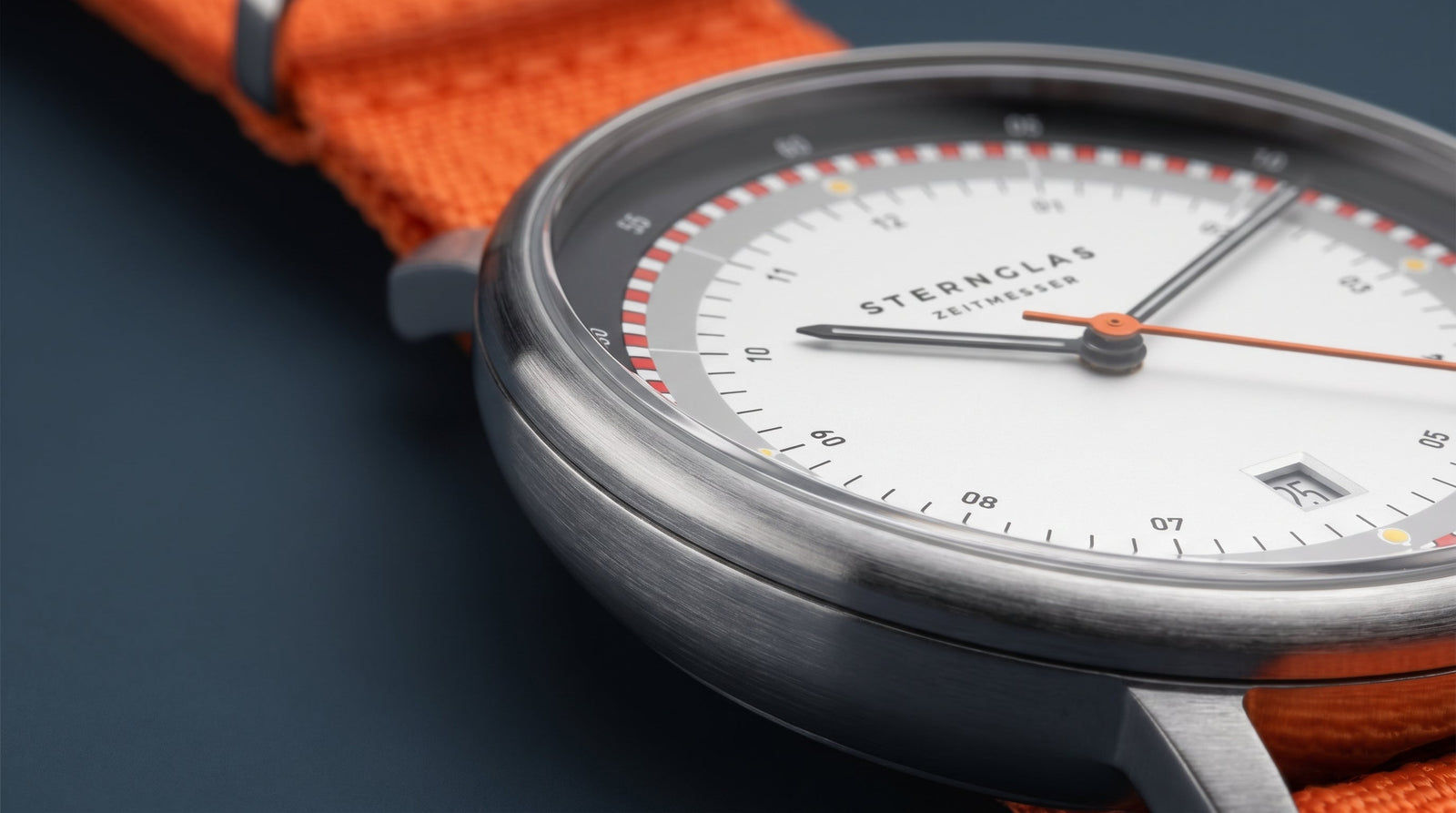
Sternglas is a young German brand from Hamburg with a focus on Bauhaus design and slim proportions. The models in this price range consistently feature sapphire crystal and a minimalist dial. Anyone looking for simple, easy-to-read watches without many complications will find a consistent line at Sternglas in this price class.
Citizen
Citizen offers both automatic models and solar-radio combinations in this price segment. Particularly noteworthy is the Super Titanium material that Citizen uses in some models: a titanium alloy hardened by surface treatment that is lighter than stainless steel and significantly more scratch-resistant than normal titanium.
Seiko
Seiko is present in this class with automatic models from various lines. The build quality of the cases, especially the combination of polished and brushed surfaces, is a frequently mentioned feature. Seiko produces most of its movements, cases, and crystals itself, which allows for a different level of quality control than brands that rely on purchased parts.

Automatic or quartz: what the budget allows in this class
With 200 to 300 euros, you can get both: an automatic with one of the movements mentioned above or a quartz watch with more sophisticated features in the case and crystal. The decision depends on what you prioritize.
An automatic in this price range runs mechanically without a battery. It gains energy from the movement of the wrist via a rotor that winds the mainspring. This means: if you wear the watch daily, it stays wound. If it lies unworn for several days, you must either wind it by hand or reset it. The accuracy is typically plus/minus 10 to 15 seconds per day, which is sufficient for many everyday situations but not comparable to a quartz watch.
A quartz watch in this class, especially with solar or radio control, runs significantly more accurately. Citizen models with Eco-Drive solar do not require a battery change because they use light energy. Models with radio control receive the time signal automatically and set themselves, provided they are within reception range. Both technologies require less attention in everyday life than an automatic.The detailed comparison of automatic, quartz, and smartwatch explains the differences in even more detail.

Styles: Sport, Dress, Pilot, Diver in the upper mid-range
In the 200 to 300 euro range, all major styles are represented, but with varying depth.
| Style | Typical features | Brands in the range | Typical use |
|---|---|---|---|
| Sports watch | Chronograph, rubber strap, 10 bar+ | Festina, Casio | Active everyday life, outdoor |
| Dress watch | Slim case, leather strap, simple | Sternglas, Zeppelin | Business, formal occasions |
| Pilot watch | Large dial, triangular 12, rotating bezel rare | Zeppelin, Festina | Everyday, casual |
| Diver's watch | Rotating bezel, 20 bar+, luminous hands | Seiko, Citizen | Water sports, everyday |
Diver's watches under 300 euros are often technically fully equipped, with a rotating bezel for dive time marking and water resistance of 20 bar (corresponds to 200 meters test pressure according to manufacturer specifications). Important: The stated water resistance is not a diving depth promise for real-world use, but a static test value under laboratory conditions. Pilot watches in this class rarely come with extra functions, but consistently with easy-to-read dials and high-contrast hands.
Checklist before buying
- Clarify movement type: Automatic, quartz, solar, or radio—each drive type has different requirements in everyday life.
- Check crystal type: Look for sapphire or mineral glass explicitly in the product description; do not assume.
- Compare case diameter with wrist circumference: Under 18 cm circumference, 44 mm cases often look oversized. 38-42 mm generally fit a wider range.
- Note strap material: Leather needs care and does not tolerate water. Rubber is lower maintenance but less suitable for formal occasions. Steel bracelets are durable but heavier.
- Read water resistance specifically: 3 bar is enough for rain and hand washing. 10 bar for swimming. 20 bar for scuba diving only makes sense in combination with a rotating bezel and helium valve.
- Note caliber designation: Anyone planning for the long term should know which movement is installed. This makes later service research easier.
- Check style against intended use: A diver's watch on a leather strap loses functionality. A dress watch with a chronograph can look visually cluttered.


