


Case diameter and wrist circumference: Which watch size fits
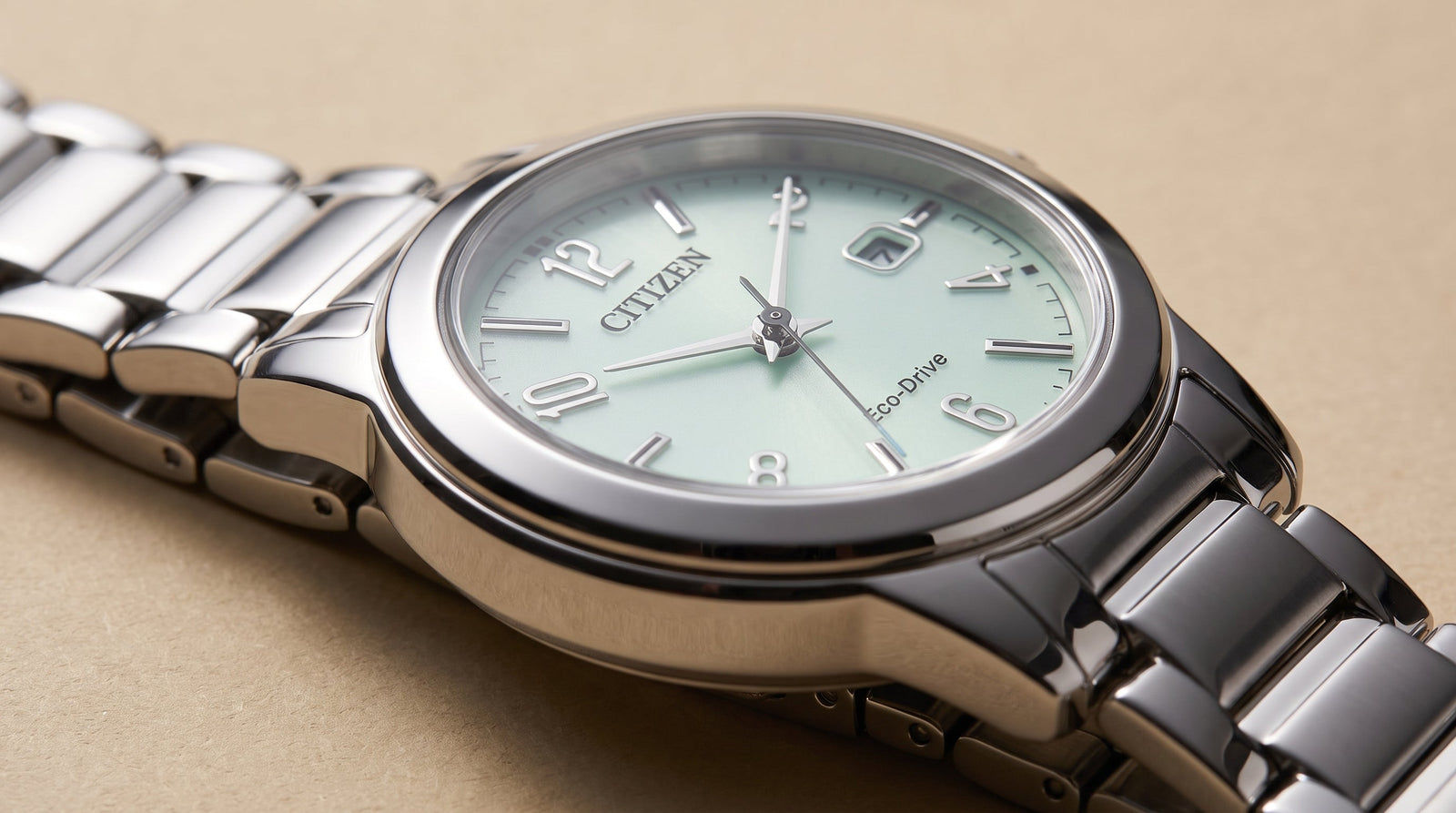

A watch that looks too big on the wrist slides around with every movement, sticks out from under a shirt cuff, and draws more attention than the wearer might want. A watch that is too small looks lost and feels like a child's accessory on a wide wrist. Anyone asking about case diameter and wrist circumference is looking for an objective criterion that makes a purchase decision reliable.
This article explains how to reliably measure wrist circumference, which guidelines apply between circumference and diameter, what other dimensions besides diameter influence the fit, and how the uhren4you range covers this spectrum. The statements are based on the technical data of the catalog items and published industry guidelines.
Why millimeters determine wearing comfort
The case diameter is the most frequently cited characteristic of a wristwatch. It describes the outer diameter of the case from edge to edge, measured without the winding crown. Even a difference of a few millimeters changes the visual effect significantly because the case is judged against a flat background, namely the inside of the wrist.
Historically, wristwatches were usually between 32 mm and 36 mm until the 1990s because the case was built tightly around the movement at that time. After that, diameters rose towards 40-45 mm, driven by fashion trends in the sports watch segment. For a few years now, a counter-movement has been emerging: compact models between 36 mm and 40 mm are gaining market share again, even among men. This explains why models from 29 mm to over 45 mm are listed side-by-side in the uhren4you range and why a blanket guideline alone is not enough.
Measuring wrist circumference: how to do it reliably
The wrist is measured at its narrowest point, i.e., just below the wrist bone, where the watch actually sits. A measuring tape is placed flat against the skin without pressing. If you don't have a measuring tape at hand, wrap a strip of paper around your wrist, mark the overlap point, and measure the length with a ruler.
Common measurement errors
- Measuring too high, i.e., on the wide part of the forearm instead of the wrist itself: the result will be 1-2 cm too large.
- Pulling the measuring tape too tight: the result will be smaller than the actual surface area available for the case.
- Measuring once and considering it final: hands swell slightly throughout the day; morning and evening values can differ by 3-4 mm. An average value is more sensible.
The measurement determined in centimeters is the starting point for the guidelines in the next section.
Guidelines: which diameter fits which circumference
The following table summarizes the orientation values that are common in the industry. They are not standards, but empirically based recommendations. Personal style preferences can shift them, but those who stay within the range are rarely wrong in terms of aesthetics and ergonomics.
| Wrist circumference | Subtle / classic | Modern / universal | Sporty / large |
|---|---|---|---|
| up to 15 cm | 28-32 mm | 33-36 mm | 37-38 mm |
| 15-16 cm | 32-34 mm | 35-38 mm | 39-40 mm |
| 16-17 cm | 34-36 mm | 37-40 mm | 41-42 mm |
| 17-18 cm | 36-38 mm | 39-42 mm | 43-44 mm |
| 18-19 cm | 38-40 mm | 40-43 mm | 44-46 mm |
| from 19 cm | 40-42 mm | 42-45 mm | from 46 mm |
If you want to read up on how individual retailers prepare these guidelines, you will find a well-structured overview with similar ranges in the watch size advisor from Juwelier Roller.
What these guidelines do not cover
The table assumes round cases. Rectangular or tonneau-shaped cases appear more compact at the same nominal width because the corners visually occupy less space than a full circle. Rule of thumb: For square cases, the case width can be a good 2-3 mm larger than the recommended round diameter without the watch looking disproportionate.

Lugs and height: what counts beyond the diameter
The case diameter is the most important, but not the only measurement for the fit. At least two other specifications from the data sheet deserve attention.
Lug-to-lug distance
The lug-to-lug distance refers to the length of the case from the top edge of the upper lugs to the bottom edge of the lower lugs. This distance spans the wrist. A case with a 40 mm diameter can have a lug-to-lug distance of 46 mm or 52 mm, depending on the lug design. The second model will protrude over the edge on a slim wrist and tilt during movement. Unfortunately, this value is not consistently maintained in the catalog, which is why it is worth taking a look at the manufacturer's website when making purchase decisions for wide wrists.
Case height
The case height, sometimes stated as thickness, determines how far the watch stands out from the wrist. A flat watch with a height of 8-9 mm slides under a tight shirt cuff; a watch with a height of 14-15 mm requires enough space between the sleeve and the skin. Sports watch models with complications such as chronographs (these are stopwatch mechanisms that require additional pushers and hands) are thicker by design.
Band width
The band should be proportional to the case. As a guideline: the band width at the lugs should be approximately half the size of the case diameter. For a 40 mm case, a 20 mm band would therefore be appropriate. Narrower bands look more elegant, while very wide bands look bulky.
Women's and men's models in the size comparison of the range
The range at uhren4you clearly shows the spectrum: women's watches start at just under 30 mm and usually go up to 36 mm, with exceptions in the sporty segment up to 39 mm. Men's watches start around 38 mm and are open-ended upwards, with the focus between 40 mm and 45 mm.
| Segment | Typical diameter range | Wrist circumference (guideline) | Example from the range |
|---|---|---|---|
| Women, classic | 28-33 mm | up to 16 cm | Citizen FE1241-71X (29 mm) |
| Women, modern / sport | 34-39 mm | 15-18 cm | Festina F20693/6 (39 mm) |
| Men, slim | 38-41 mm | 16-18 cm | Sternglas Hamburg (42 mm) |
| Men, standard | 40-44 mm | 17-20 cm | Festina F20692/2 (45 mm) |
| Men, oversized | from 44 mm | from 19 cm | Festina F20692/2 (45 mm) |
A special feature of the range: the boundary between women's and men's watches is fluid. A 38 mm model listed under "men" fits a wrist with a 16 cm circumference better than a 42 mm model. Conversely, women with larger wrists or a distinct sporty taste can easily wear 39 mm watches that were originally designed as women's models. The target group information in the catalog is therefore an orientation, not an exclusion criterion.
If you would like to pursue the question of the right model for a specific occasion and style profile, you will find a structured overview in our article Men's watch by occasion: business, casual, sport, and dress. For readers comparing models in the mid-price range under 200 euros, it is also worth taking a look at the article Men's watches under 200 euros: what the mid-price range offers.
When the watch fits both target groups
Models between 36 mm and 40 mm are often marketed as "unisex" in retail. This picks up on the trend towards more compact men's watches and appeals to women who prefer a present, not dainty, dial. In the range, such models are listed under different target groups; the diameter in the data sheet is the decisive criterion.
Checklist: check before buying
- Measure wrist circumference at the narrowest point, not on the forearm.
- Read the case diameter from the data sheet, do not estimate from the product photo.
- Check the lug-to-lug distance if specified in the data sheet; particularly relevant for slim wrists.
- Note the case height if the watch is to be worn under tight sleeves.
- Cross-check the band width against the diameter: approximately half as wide as the diameter is a good starting value.
- For square cases, add 2-3 mm to the guideline because corners look visually less bulky than a full circle.
- Define style intention: subtle, modern, or sporty; this shifts the recommended range within the guideline.


